03/01/2015




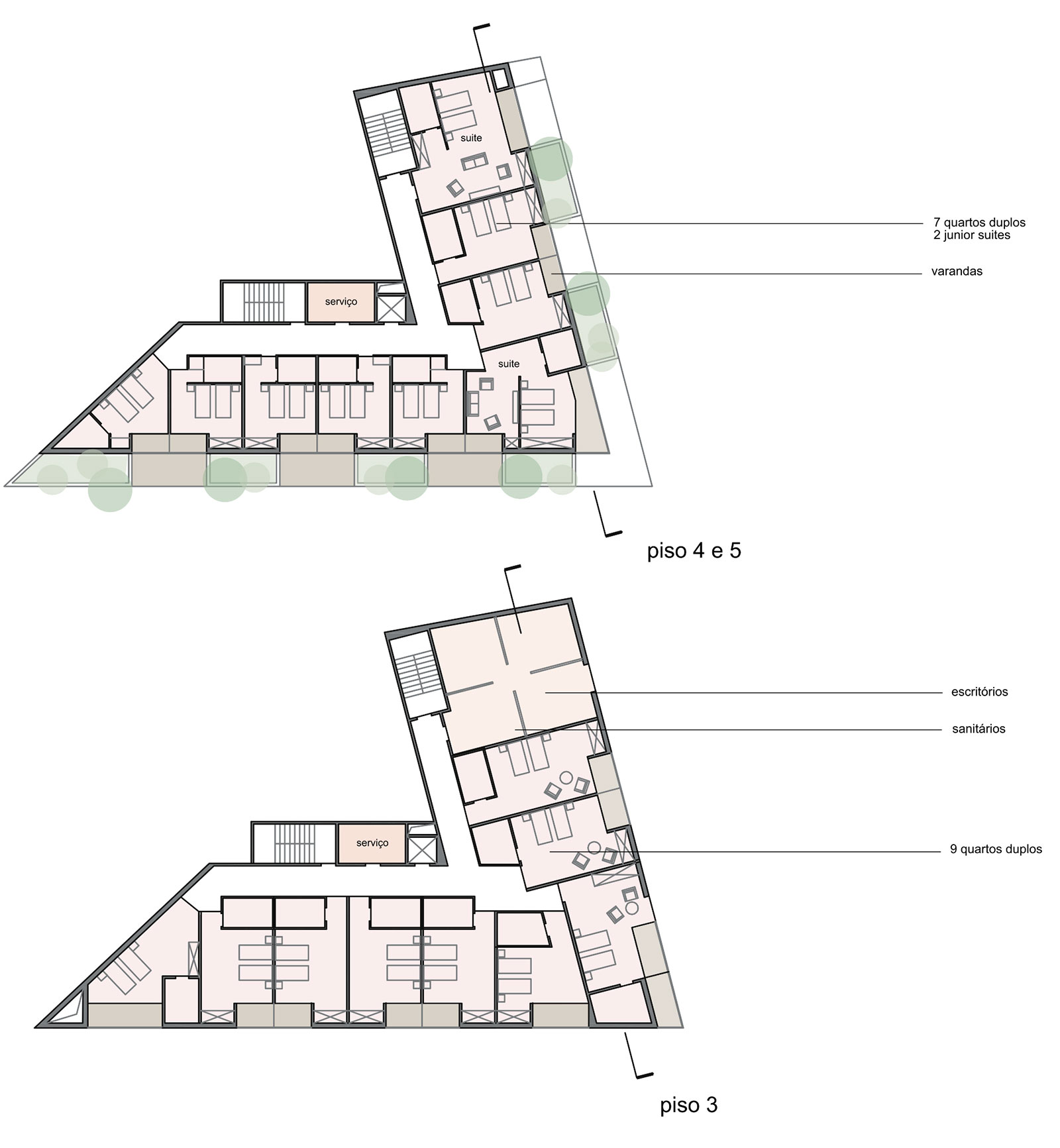
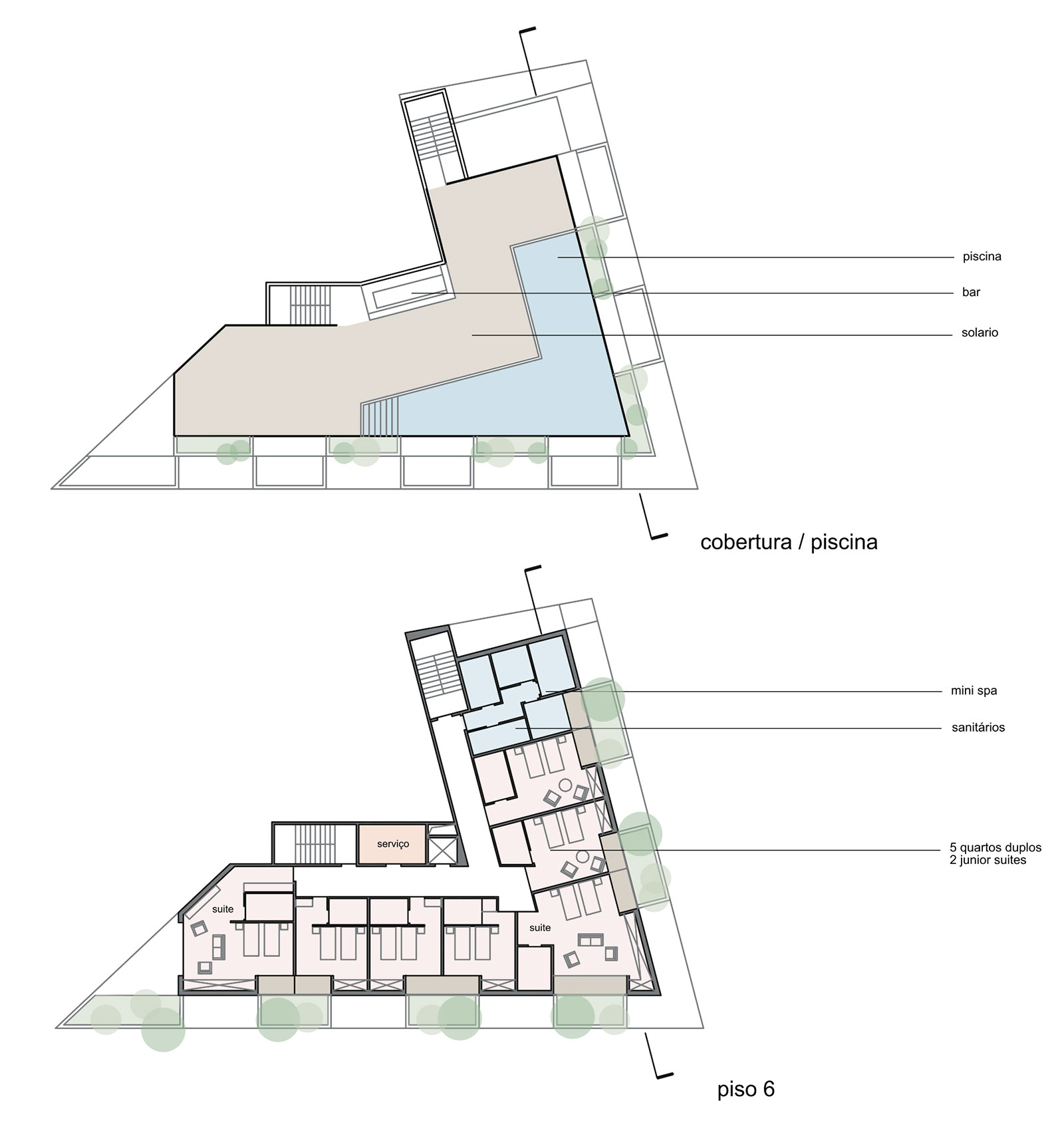
This is a project for a small hotel set in a triangular plot in Pontinha’s ship terminal pier and very close to the sea. The site has a good exposure to the sun and the ocean view. The hotel has six floors and a total of 34 guestrooms.
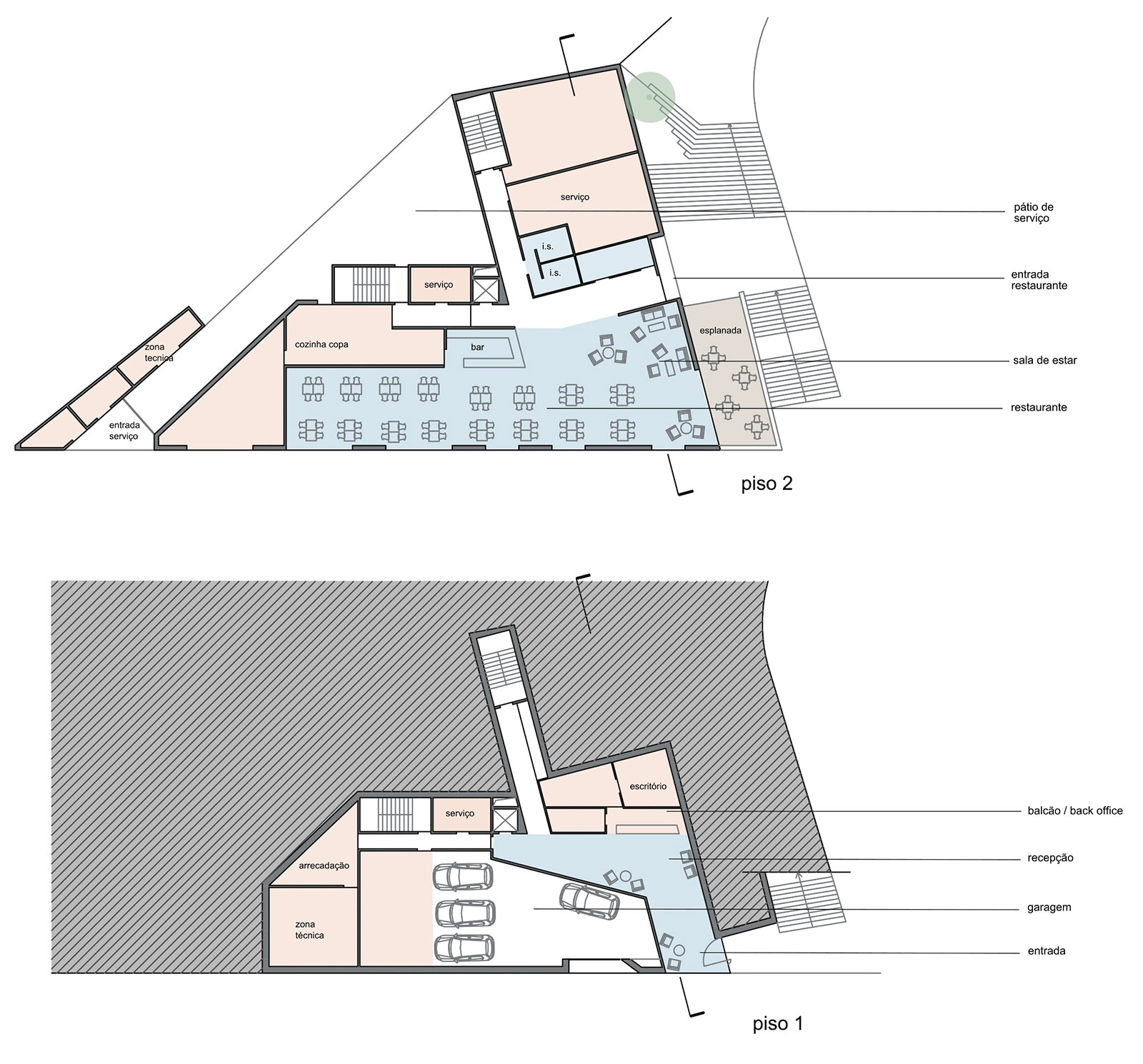
The entrances are located on the ground floor and first floor, where the service and public areas are found, as well the restaurant and the outdoor terrace. The guestrooms and suites with private balconies occupy the above floors.
The building and its service area fully cover the available land so the pool and the solarium are on the top floor. The swimming pool is located on the building’s outer corner. The two sides along the facades are built with glass panel, making it visible to the outside. On the other hand, the water and the swimmers can be seen from the street.
The windows and balconies of the guestrooms are located in the east and south facades and face the outside of the plot and he corridors and service areas are situated on the opposite side.
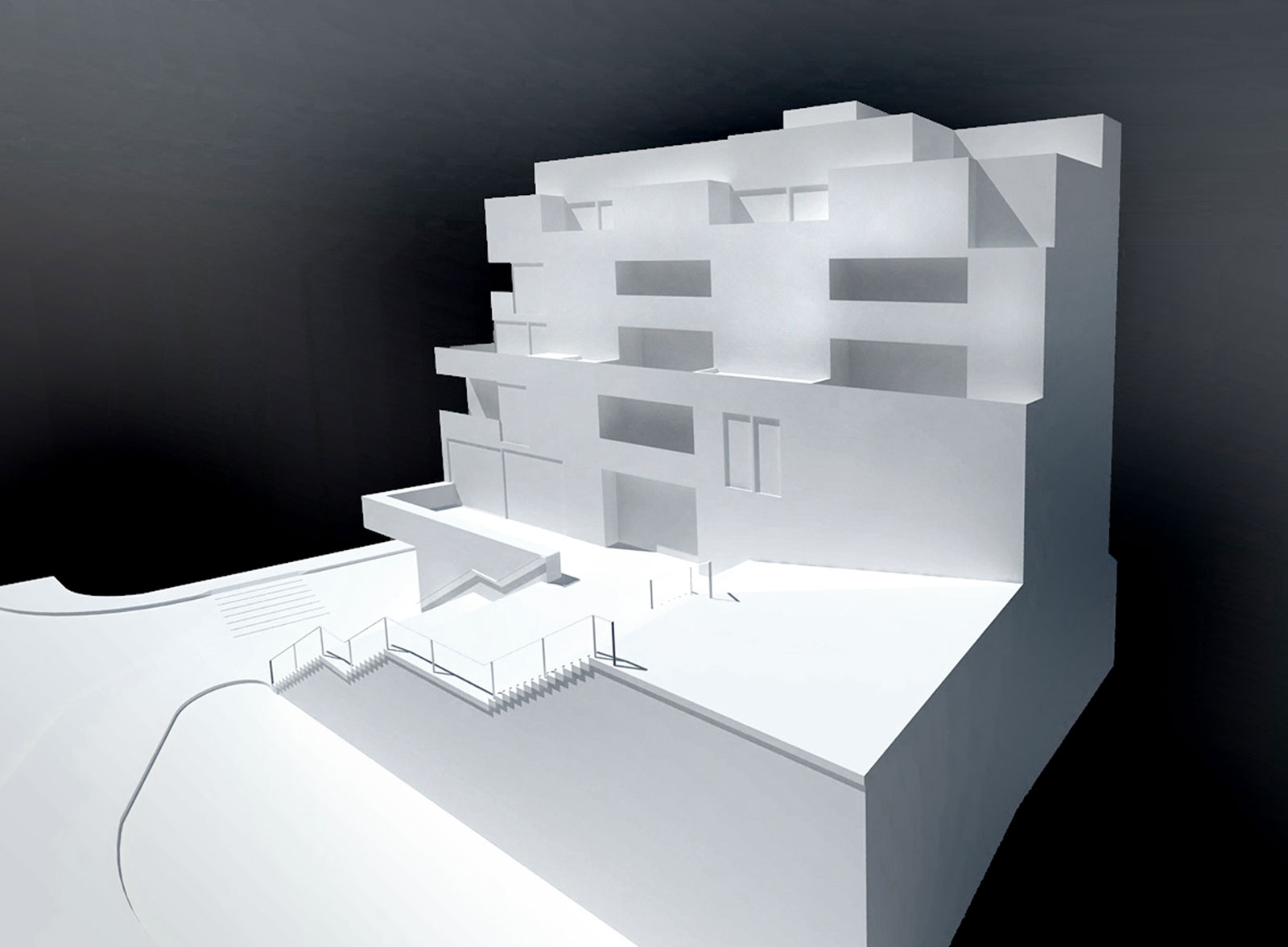
The building main facades are volcanic basalt stone clad. These are aligned with the site boundaries but recede from the 3rd floor upwards, allowing small trees and shrubs to provide shade to the balconies. It resembles a rock with terraces where plants and vegetation grows.
status – stand by
location – Funchal Madeira Portugal
year – 2013
architect – Duarte Caldeira



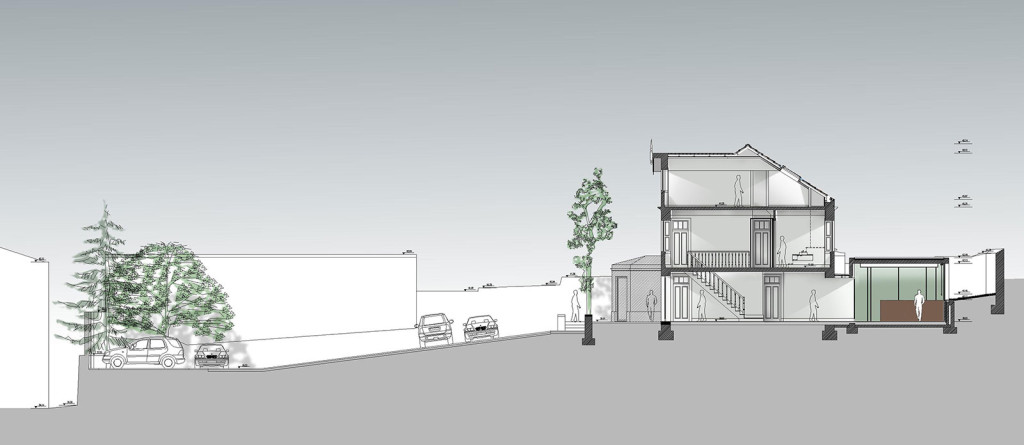
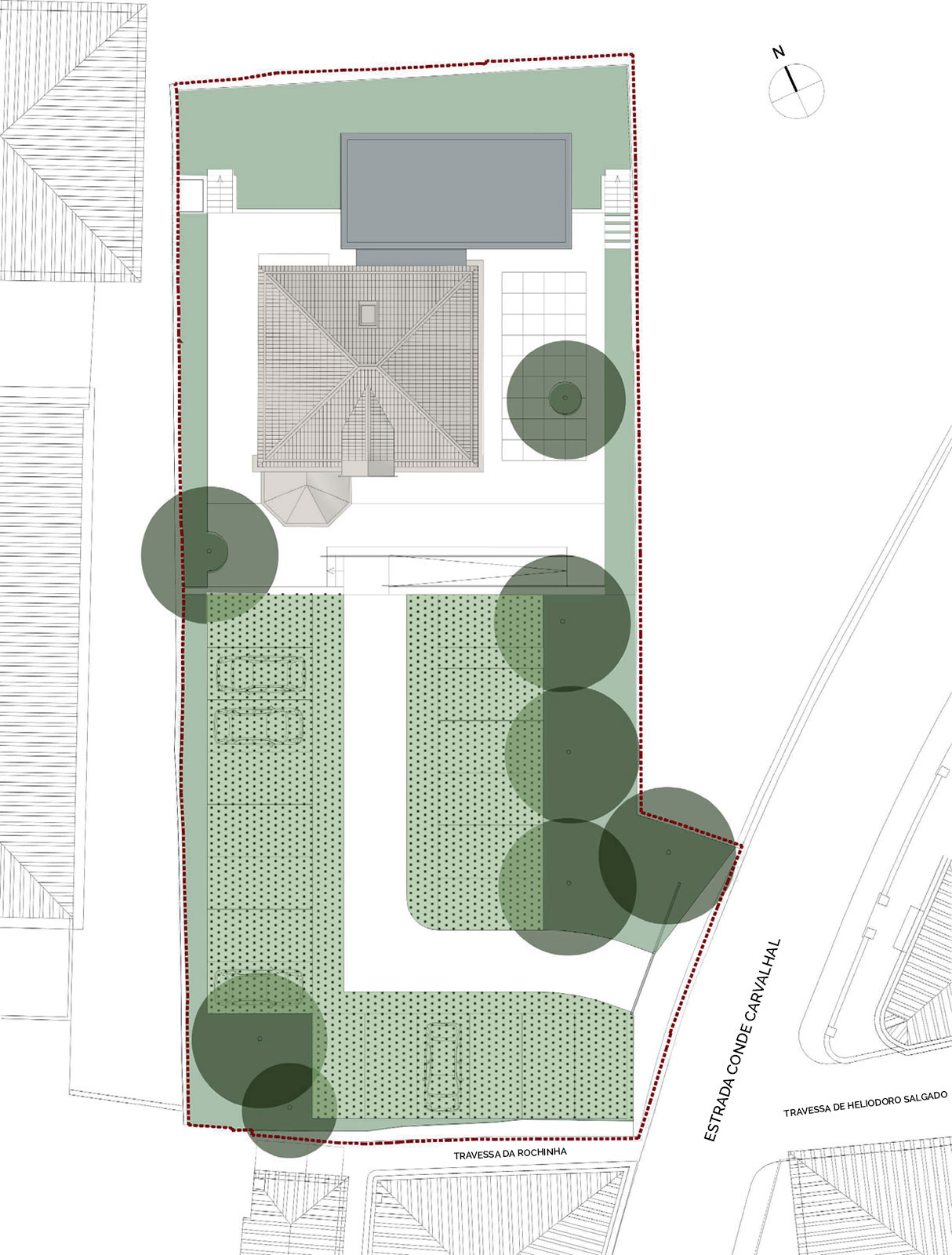
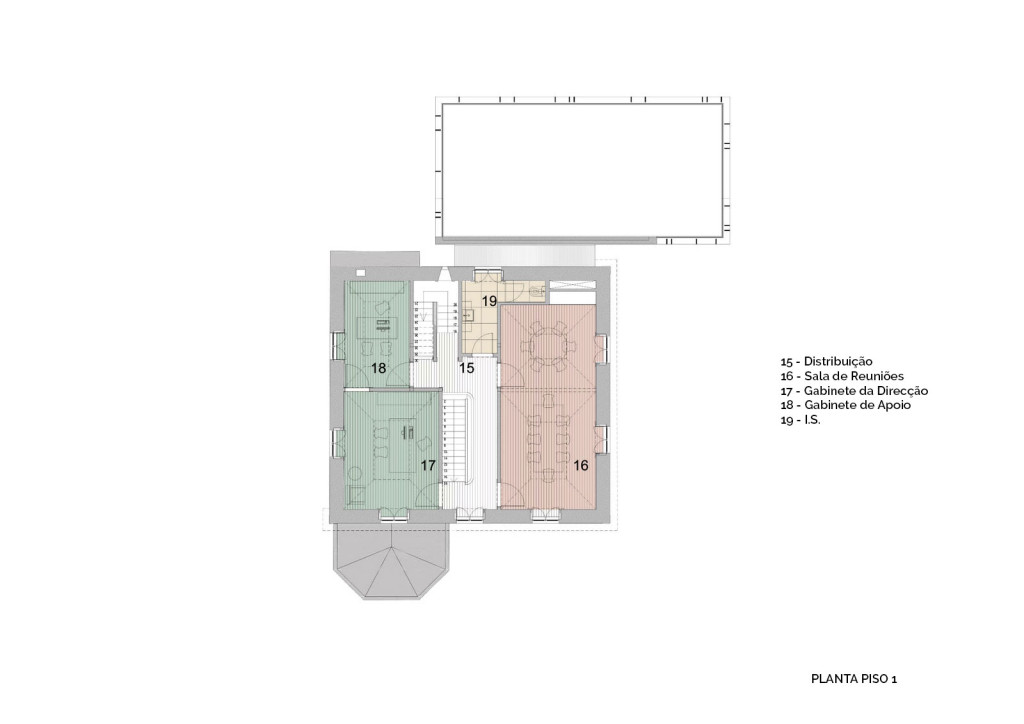
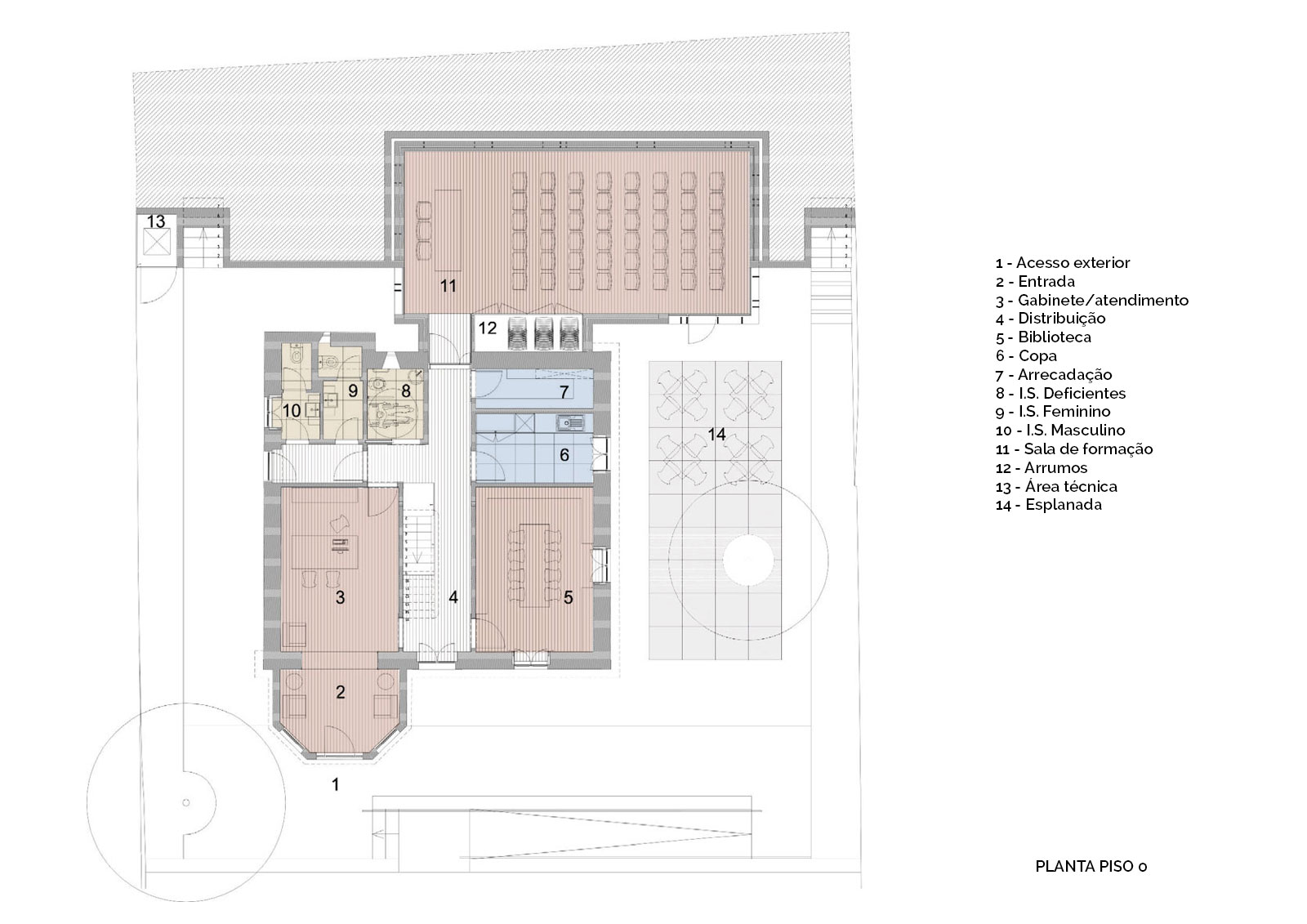
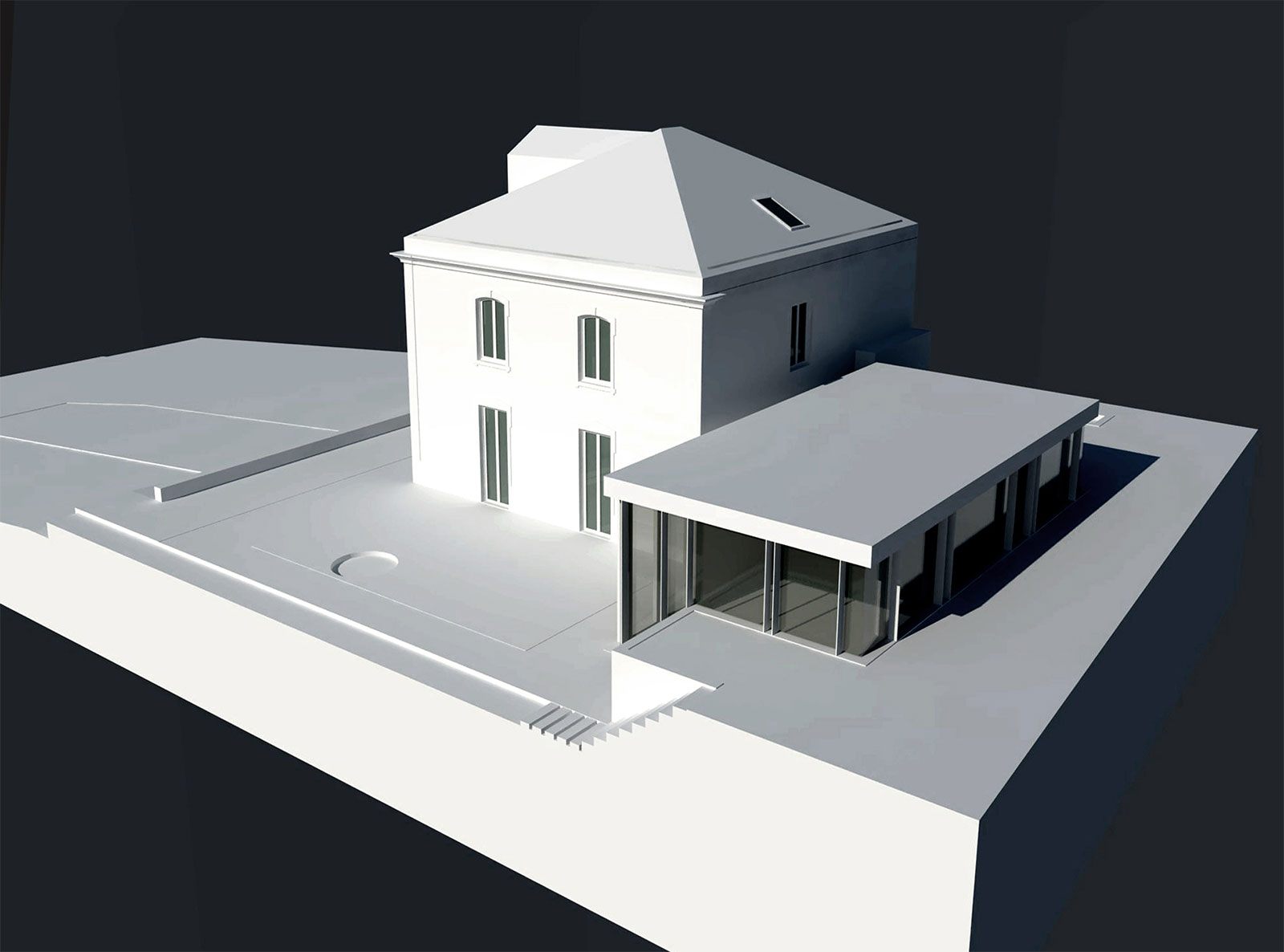
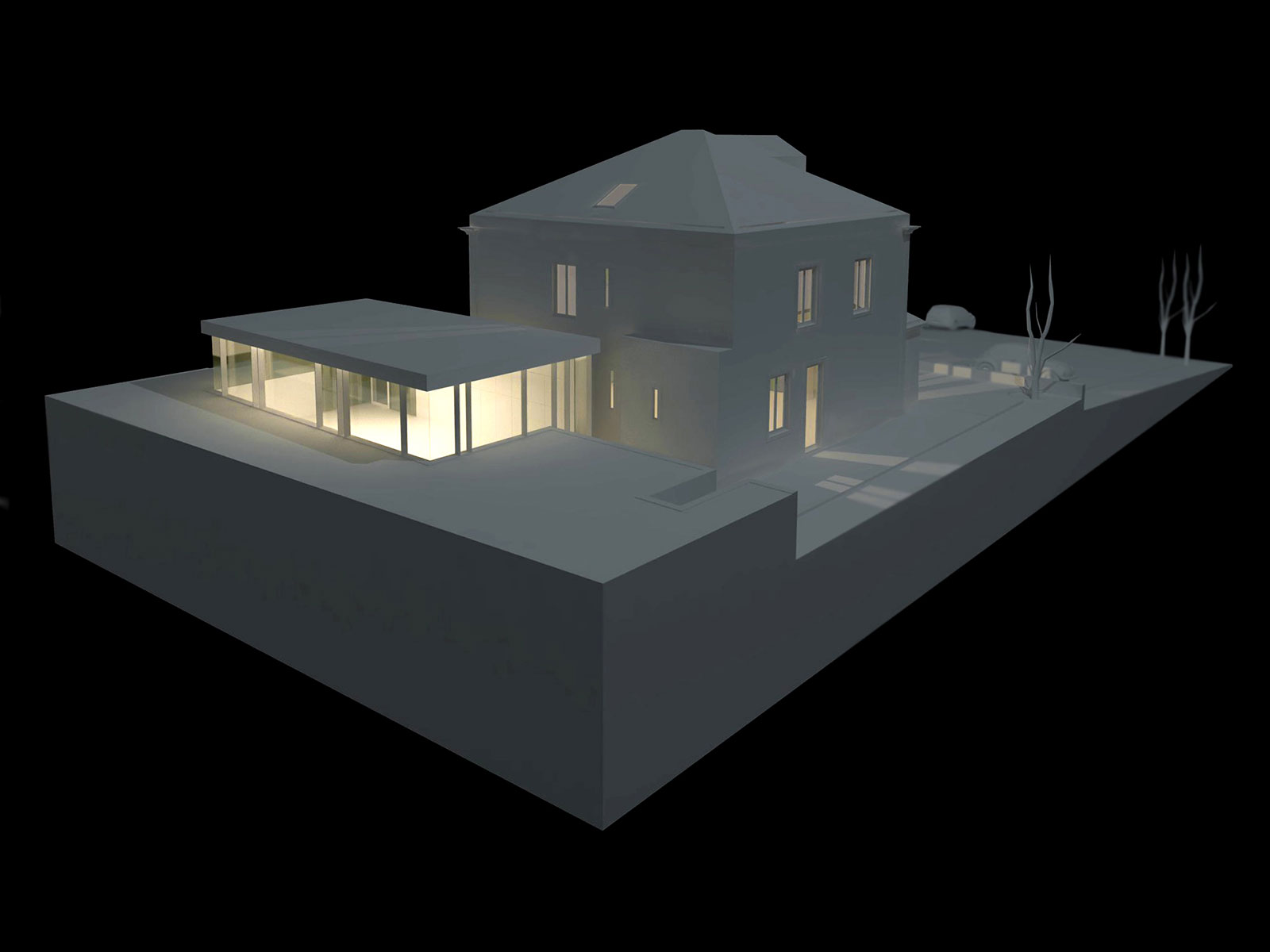
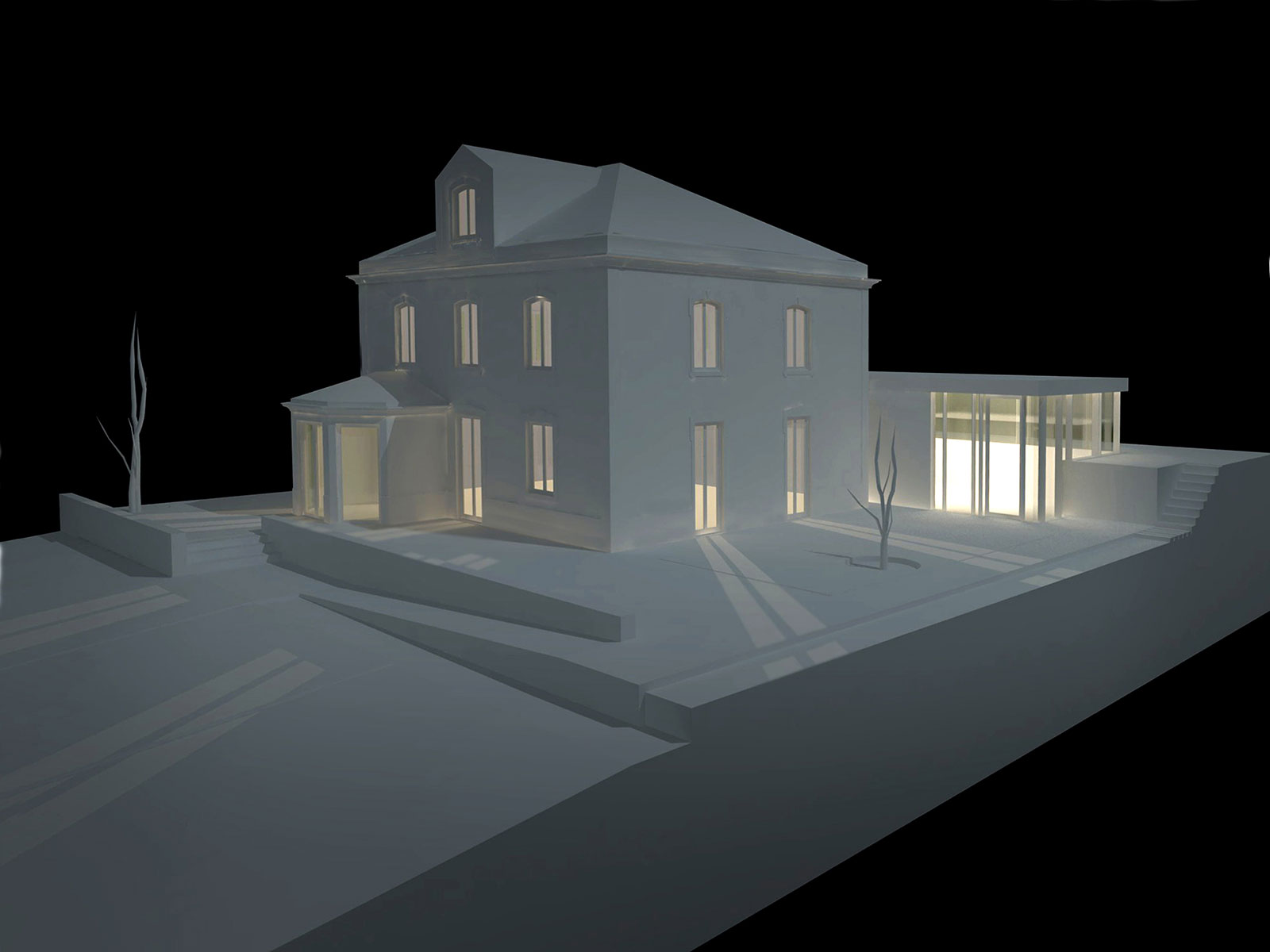
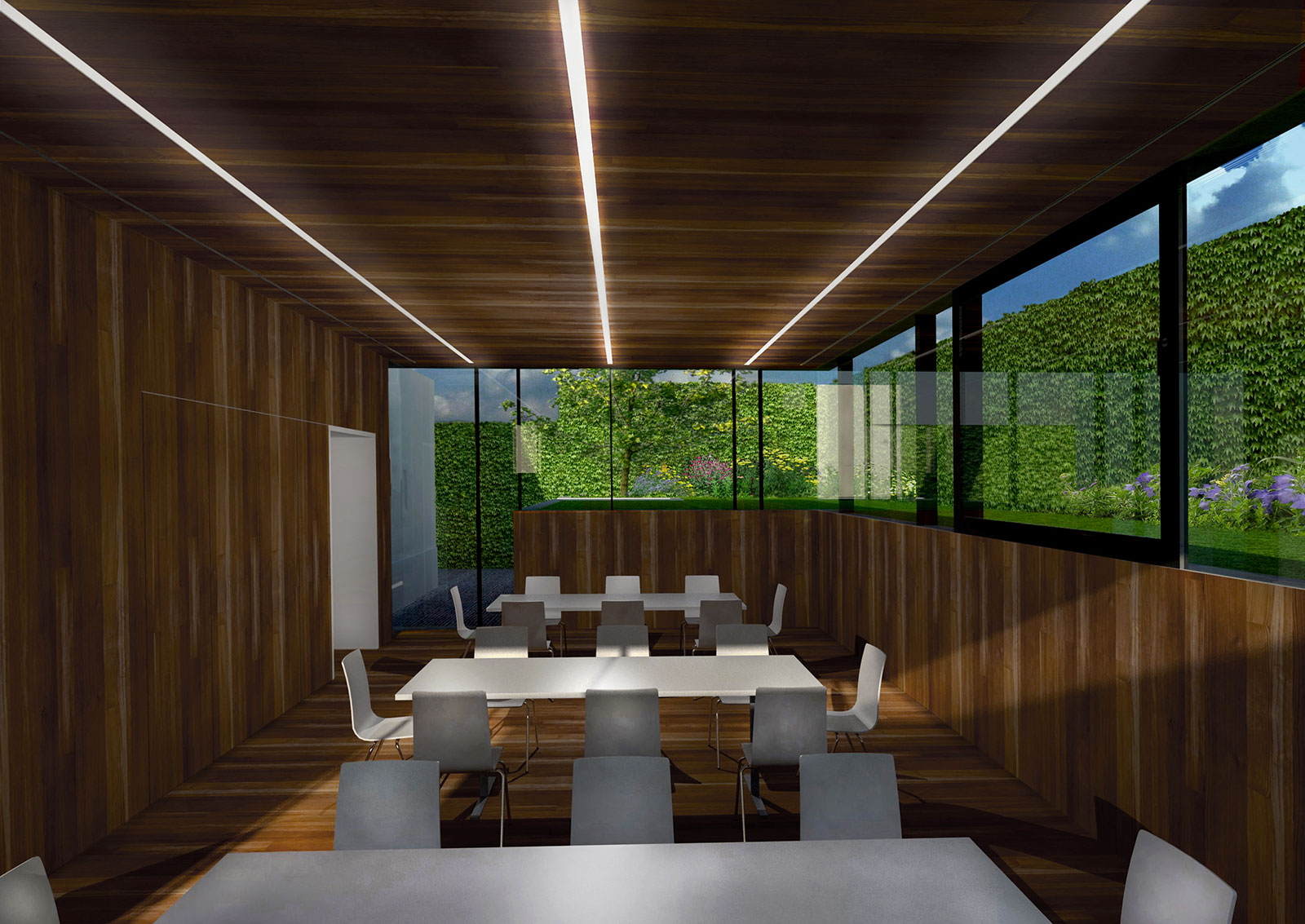
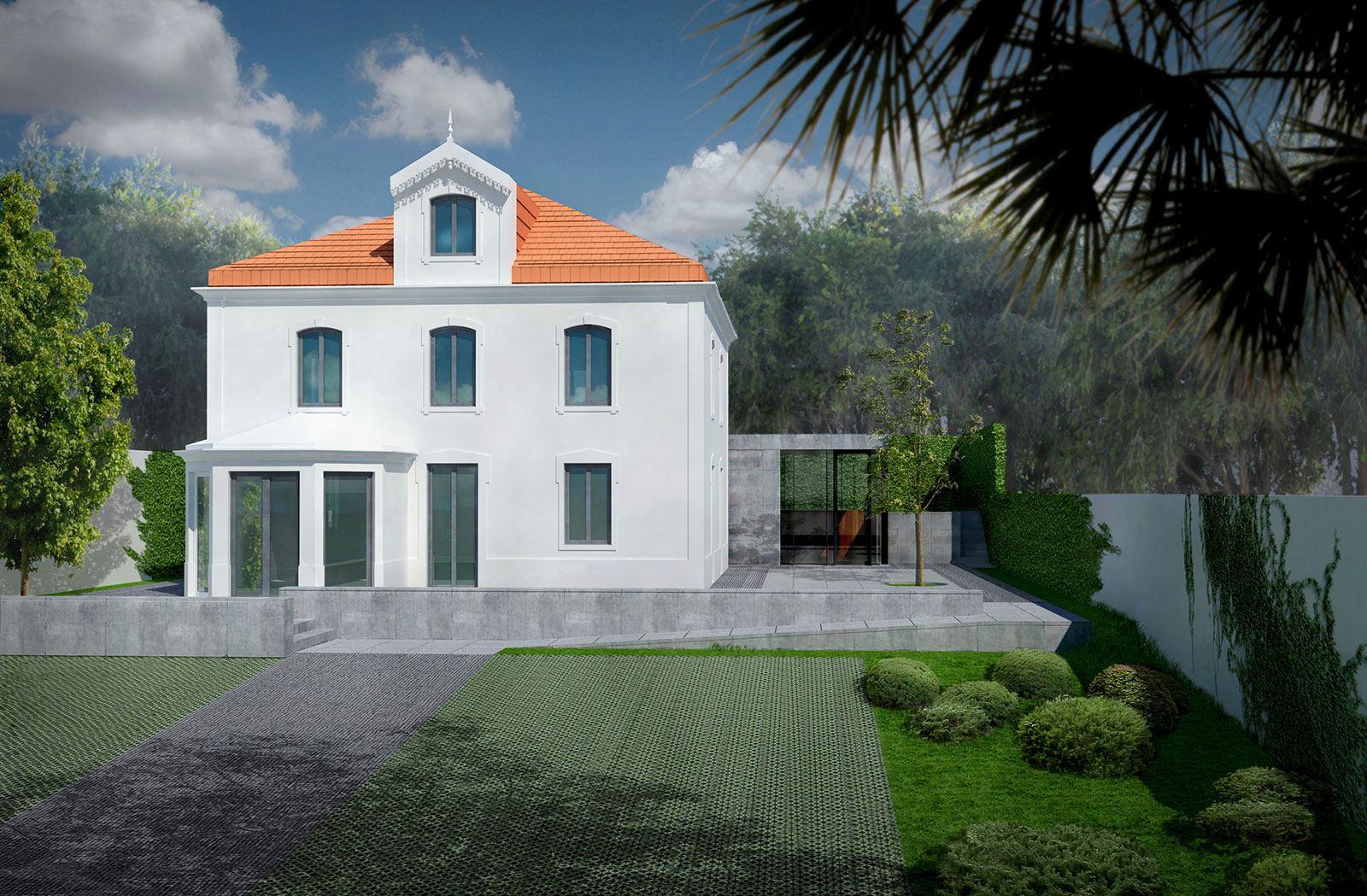
This is a renewal and an extension of an old house into offices for the local delegation of the Ordem dos Engenheiros. A concrete and steel extension will be added to the existing building to make room for a new conference room. This room, witch interior is fully lined with pine wood boards, will be partially buried in the garden. In the existing two-floor building, built with stonewalls and wooden flooring, interior fittings are made to accommodate new toilets and a kitchen. The rest of the building remains the same, with all materials and equipments being restored and renewed.
The extension is on the ground floor and connects directly to the building through an opening in the northern facade. Its structure is made with reinforced concrete and steel blades and the exterior walls in aluminium frame and glass.
The gardens will be replanted and a new paving sidewalk with the reused pebbles and basalt pavement will be made to accommodate the car park and access for disabled visitors.
status – em construção
location – Funchal Madeira Portugal
year – 2013
architects – Duarte Caldeira, Sergio Gouveia



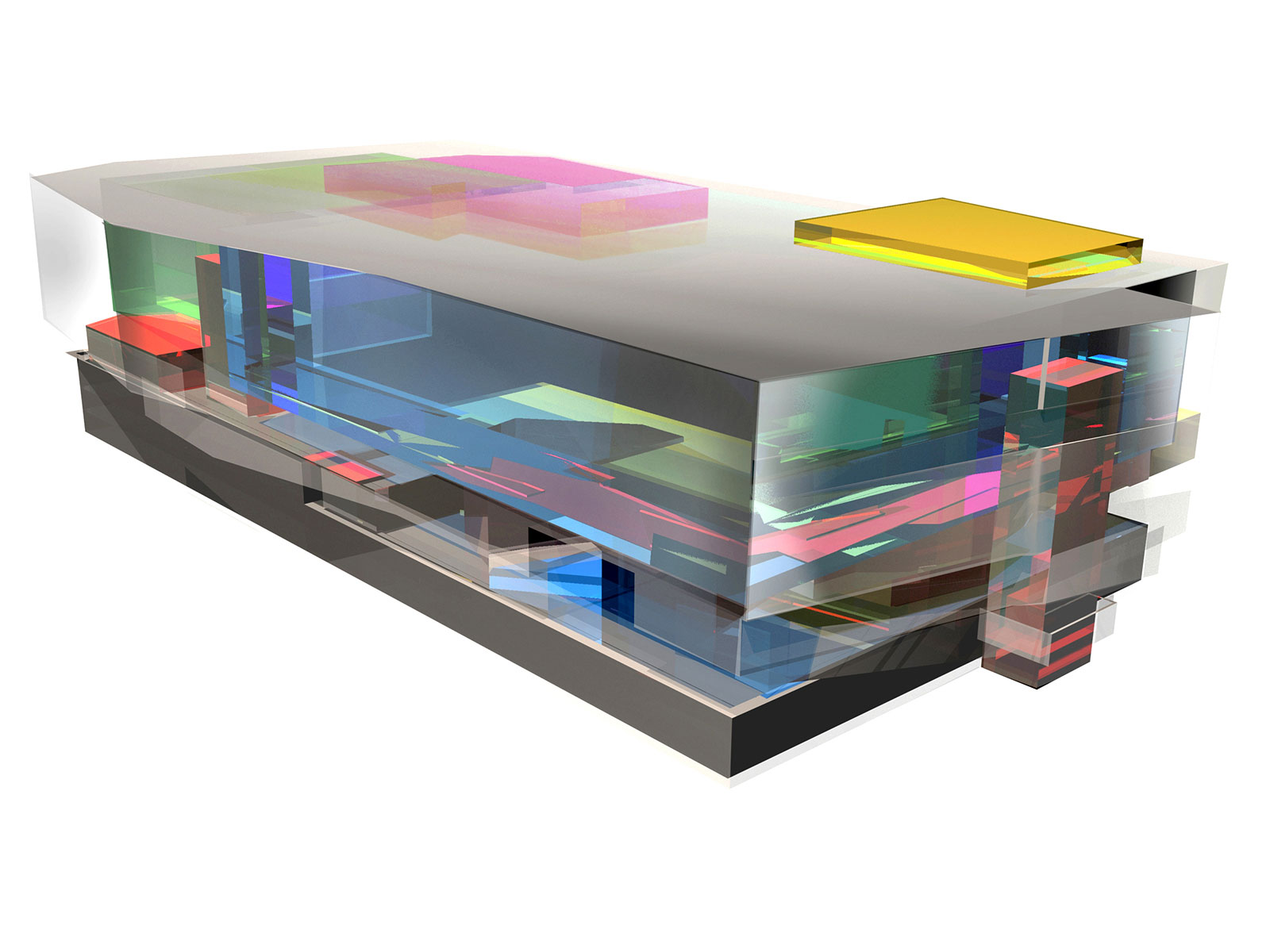
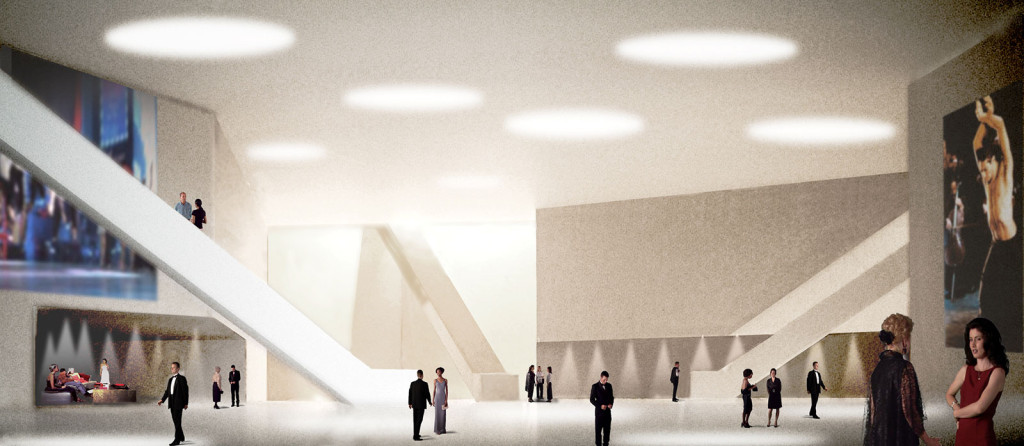
In the valley of the S.João stream, along a road between steep slopes dotted with houses, we reach a place where the space widens making a pocket in the valley. This is the site for the Multipurpose Pavilion, a venue for shows, music performances, ballet, opera, theatre and sports events such as tennis, basketball, football, gymnastics, etc.
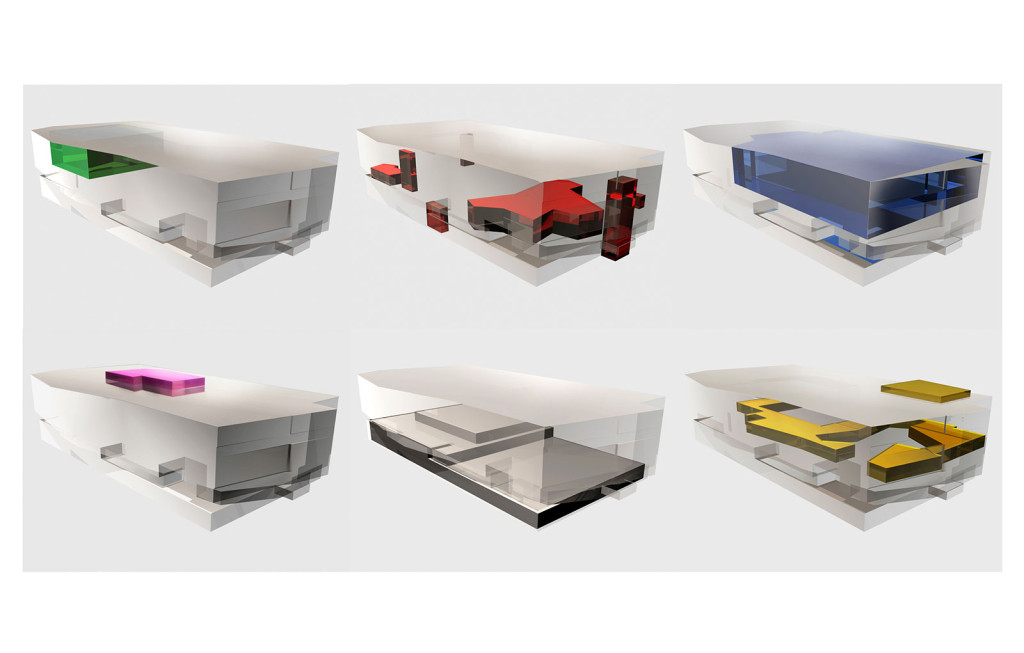
This proposal favours the versatility of the spaces and creates conditions to develop various events simultaneously even in the case of events of distinct character; a capacity to accommodate a larger number of different activities, with several programs in convertible spaces. With a maximum capacity of 10 000 spectators, has the movable seating enables for extension and multiple seating configuration and adapt to the various types of activities and events.
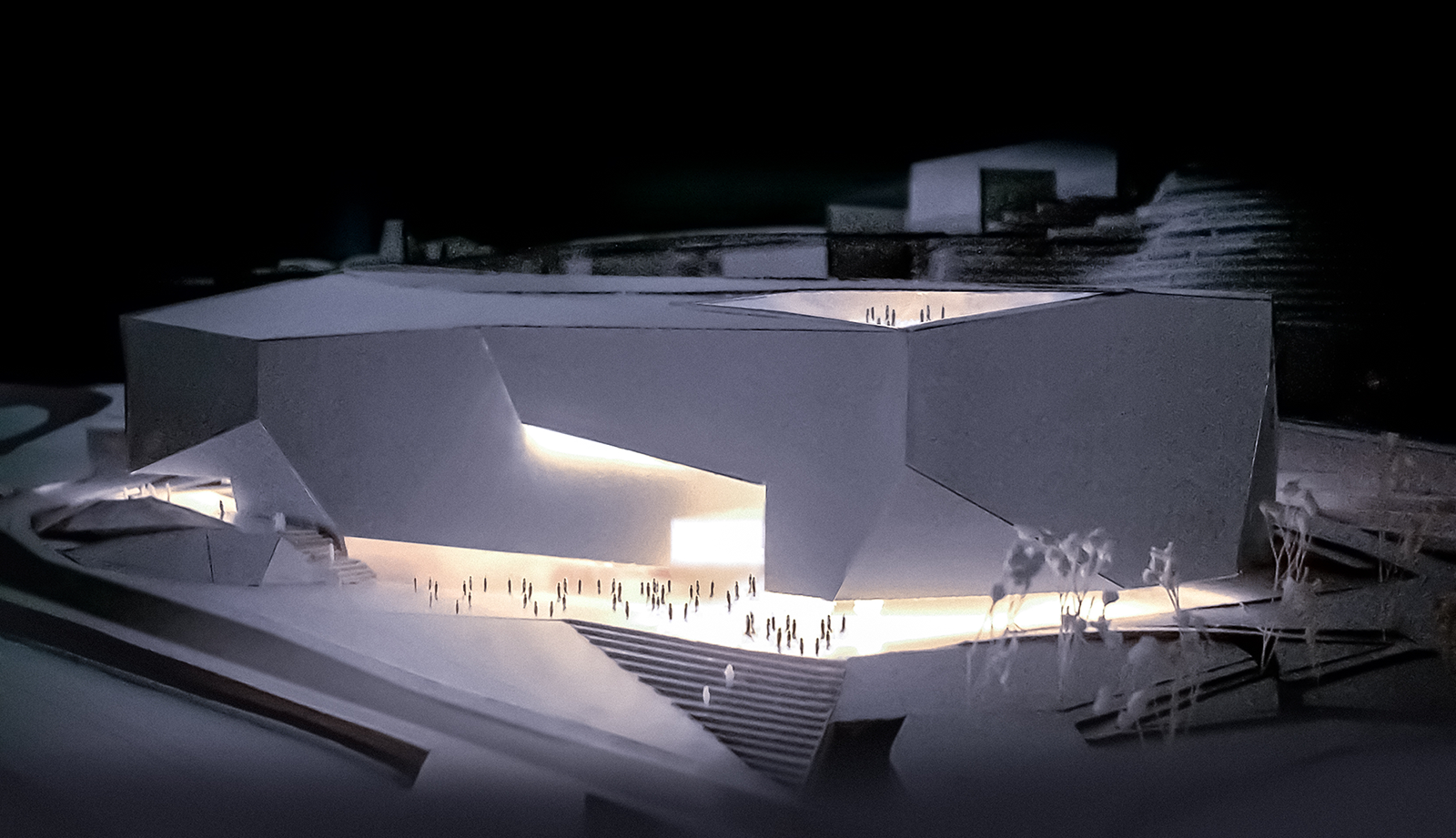
Although some parts of the polyhedral shape building are connected to the steep terrain, it can be seen as a isolated volume, something that can be walked around. It is a not composition of volumes or forms attached to the urban fabric, it is actually secluded and loose.
If on one hand its large size does not let it to merge with the neighbourhood buildings, on the other, it stands clearly visible and easily identified as a public building.
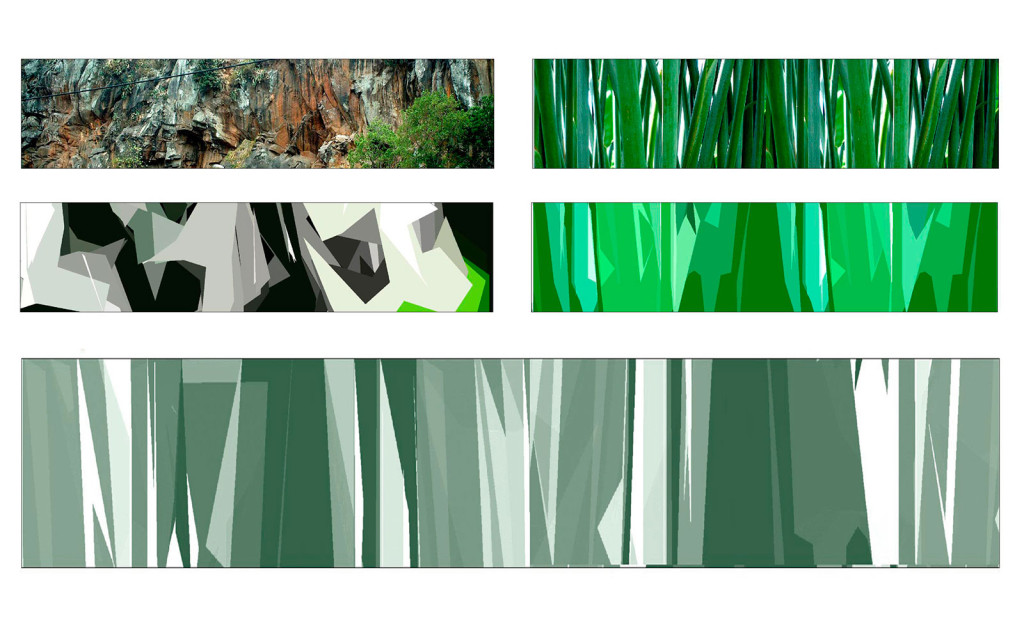
The facades and the roof melt into a set of surfaces, forming a whole and large outer shell that contains all the forms. The outer skin makes a vigorous impression in the building and establishes its image. The facades, marked by cuts and interceptions of vertical and oblique planes, refer to the mass of basalt rock that distinguishes the topography of the site and the island of Madeira. The geometries of these massive stones match the oblique gables and faceted facades of the pavilion.
The building and the basalt slopes, face each other, separated by the stream that juxtaposes them symmetrically, one mirroring the other, opposing nature with and artifice.
status – not built
location – Funchal Madeira Portugal
year – 2004
architects – Duarte Caldeira, Sergio Gouveia, Filipe Clairouin, Hugo Jesus


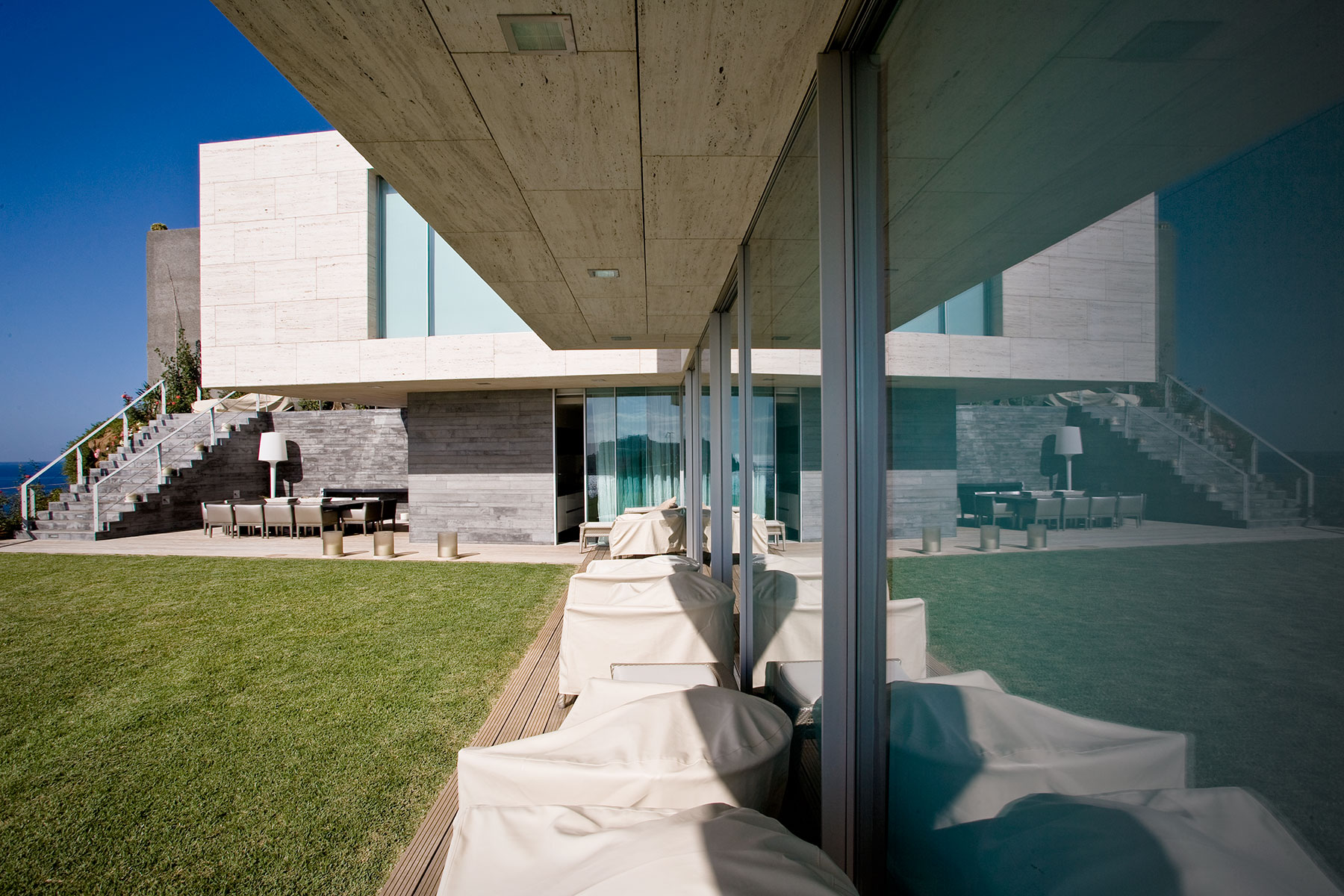
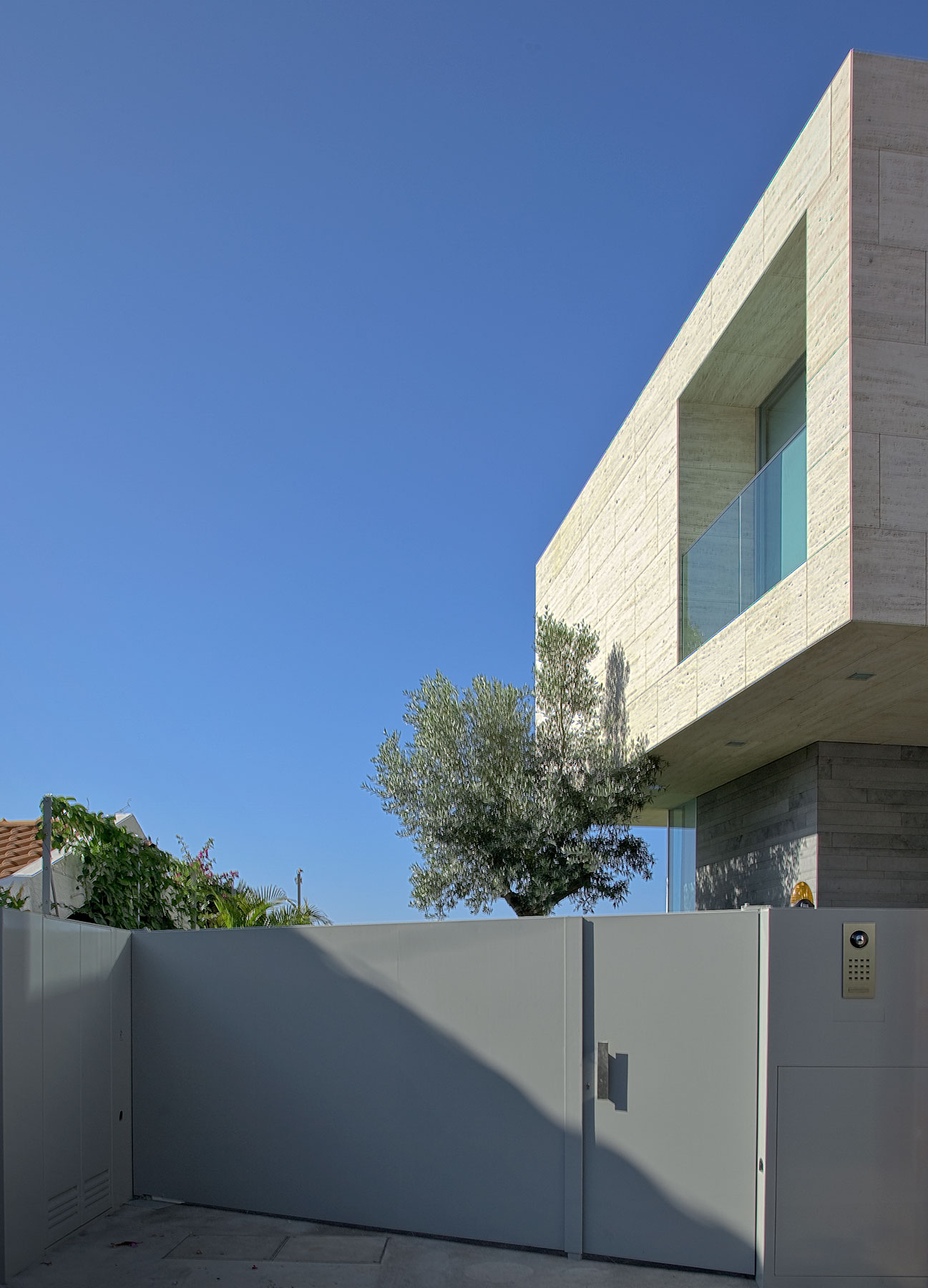
Located on the southern coast of the island of Madeira this villa was designed to enjoy the view of the ocean. It is built high on a cliff overlooking the sea where the sight of the horizon is ever present. It would be a ordinary house, should it no be on the edge of a cliff. The cliffs exert an irresistible attraction, but also raise fears. It is like being in the presence of a border or an abrupt change, a physical breakdown of the territory and nature. But is closer to the vast and undefined. It is a place of great tension, as well as beauty.
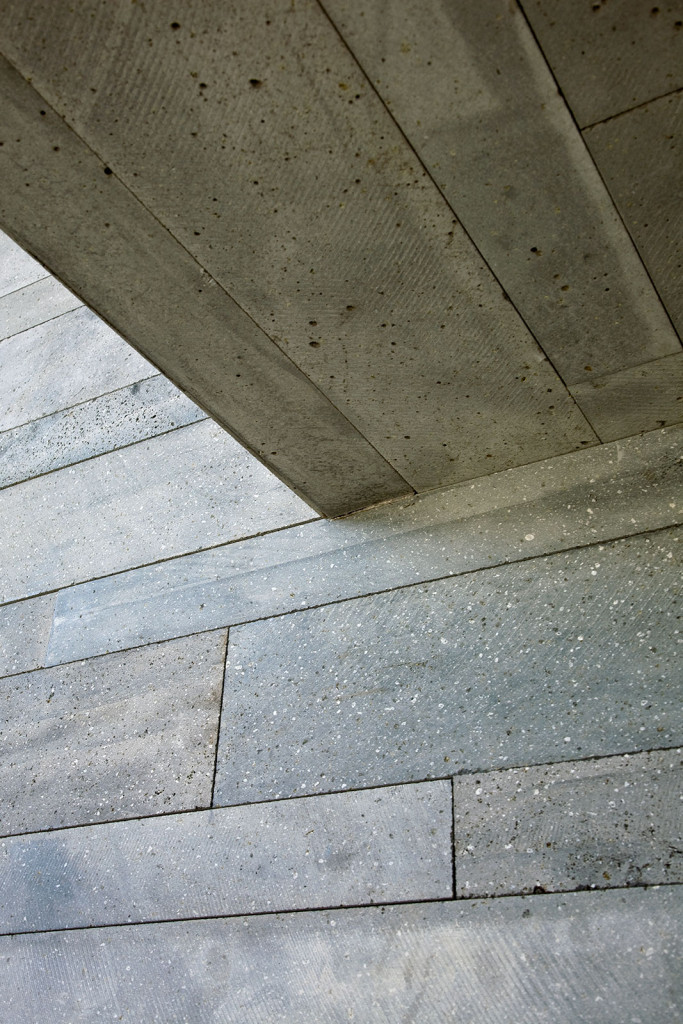
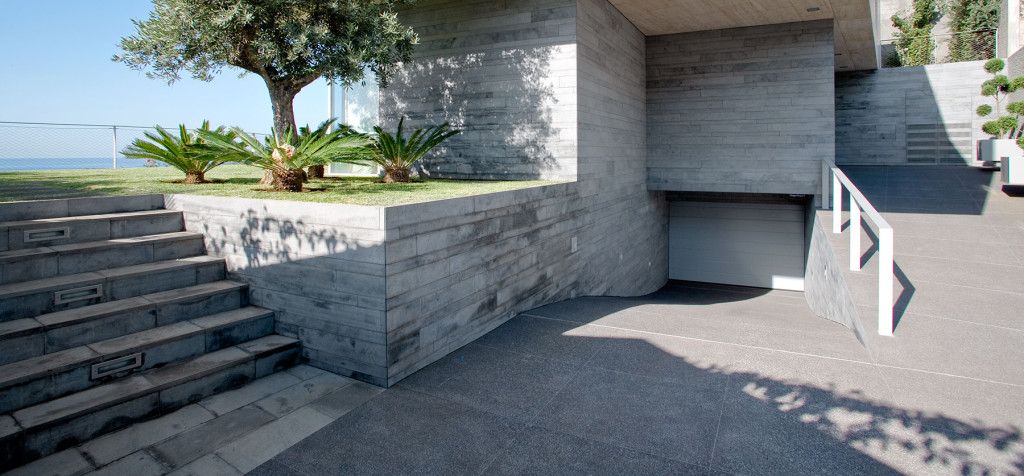
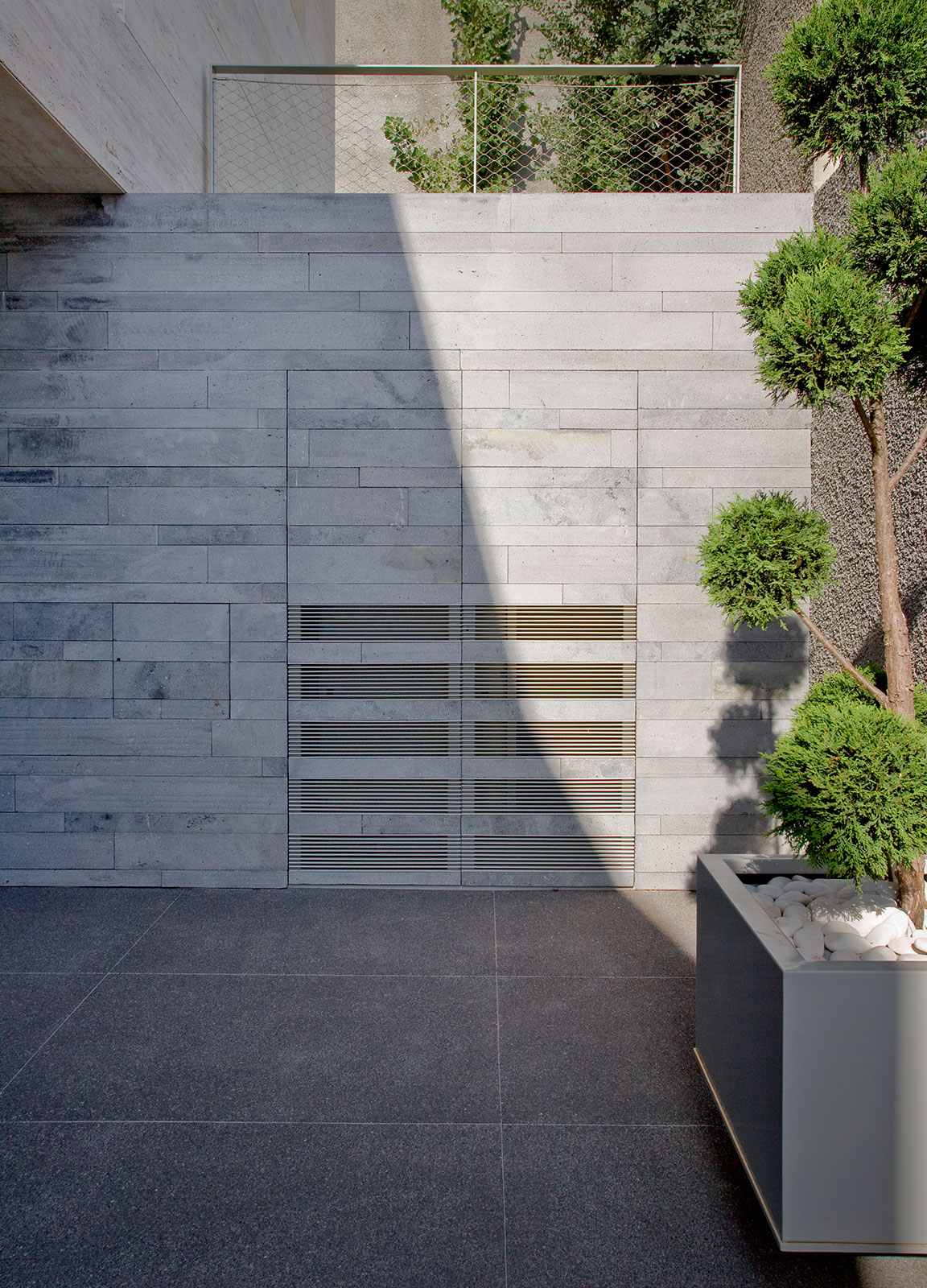
The building was designed with simple volumes cladded in stone, chosen to render “materiality” of the object, to “hold it into the ground” – provide security and shelter.
Travertine cladding at the top and basalt at the bottom creates two distinct layers of colour and texture similar to the cliff’s geological strata. The plot of about 620m2, needed to be managed sparingly to accommodate three-bedrooms, one en suite, an office and library, living and dinning rooms and parking for several cars. The geometry of the house is given by the constraints of the site. It’s layout has the shape of “L” to diminish the footprint area and allow more space for the garden. The garage is located underground to avoid further unnecessary building size.
status – built
location – Madeira Portugal
year – 2007
architects – Duarte Caldeira, Filipe Araújo

The “Hotel da Vila” is a small hotel, located in Ponta do Sol, a village on the southwest coast of the Island of Madeira. It stands on the sunny sea front of the village, with magnificent views of the Atlantic Ocean. It has fifteen double bedrooms.
The building was almost complete when the nearby “Estalagem da Ponta do Sol” a member of the “Design Hotels™” decided to manage it.
Using local materials and craftsmanship, the team created the ground floor café/bar, the reception areas and designed most of the hotel furniture, including the rooms. Wood and stones from the surrounding mountains were used to make some of the objects and furniture.
Working on a very tight budget, the design was kept simple and raw, using inexpensive materials such as the mixture of blue Portuguese tiles in the kitchen or the front desk made of re-used wood.
Taking inspiration from the rural culture and its ingenuity, objects like the floor and table lamps, the plastic and wheat straw headboard pillows or the ceiling lamps of the restaurant, reveal an unexpected and humorous wit.
The building’s interior is completely clad in black and white, including the furniture in the guests’ rooms, which is mostly white. The table and floor lamps were custom made in painted and natural wood, and even the white TV matches the room colour.
Upon crossing the ‘cartoon like’ hotel front door, a glass desk with two wooden stools welcomes the guests. On the left hand side a door invites them to have a drink at the bar/restaurant, in an area that highly contrasts with the hotel’s white interior. It has a wood covered ceiling and wall with two windows facing the blue tiled kitchen. The other wall is an irregular pleated surface, which opens to an outside terrace where coffee or meals can be, enjoyed in the shadow of old palm trees. In this restaurant locals and tourists mingle and relax, have drinks and listen to music during the warm evenings of the island.
status – built
location – Ponta do Sol Madeira Portugal
year – 2012
architects – Duarte Caldeira, Sergio Gouveia
photography – João Morgado, Pedro Clode


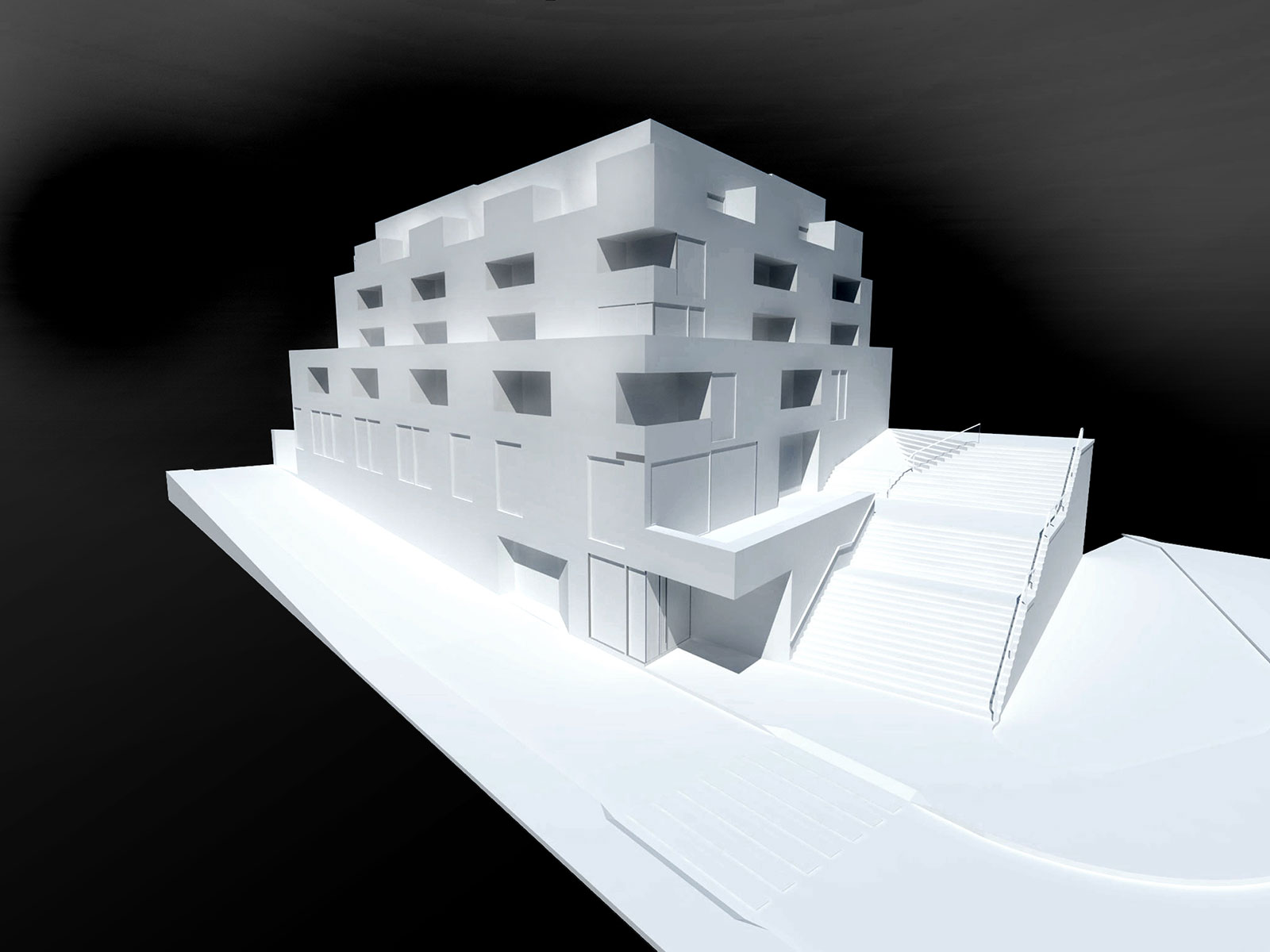
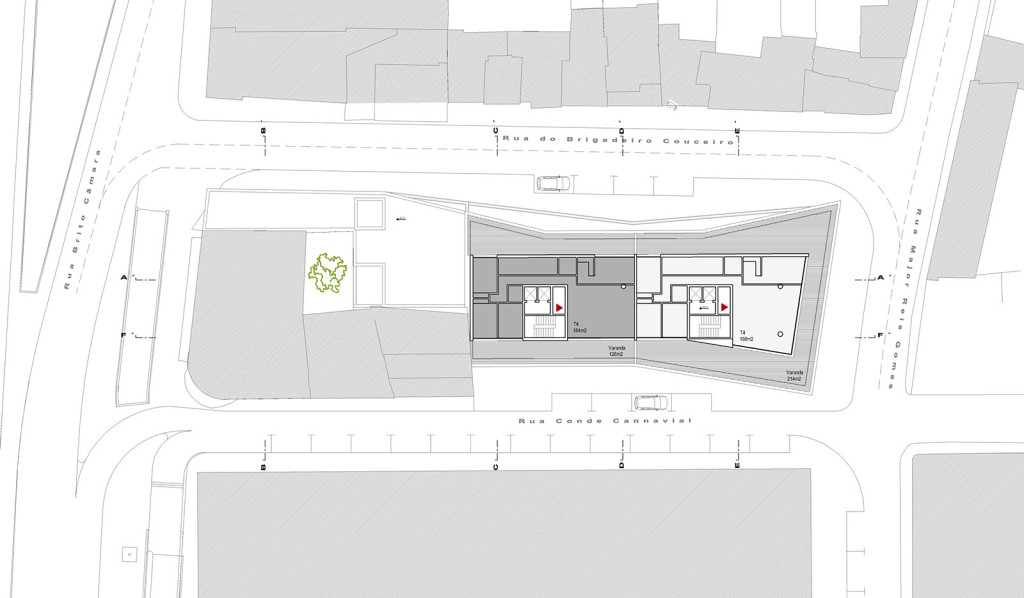
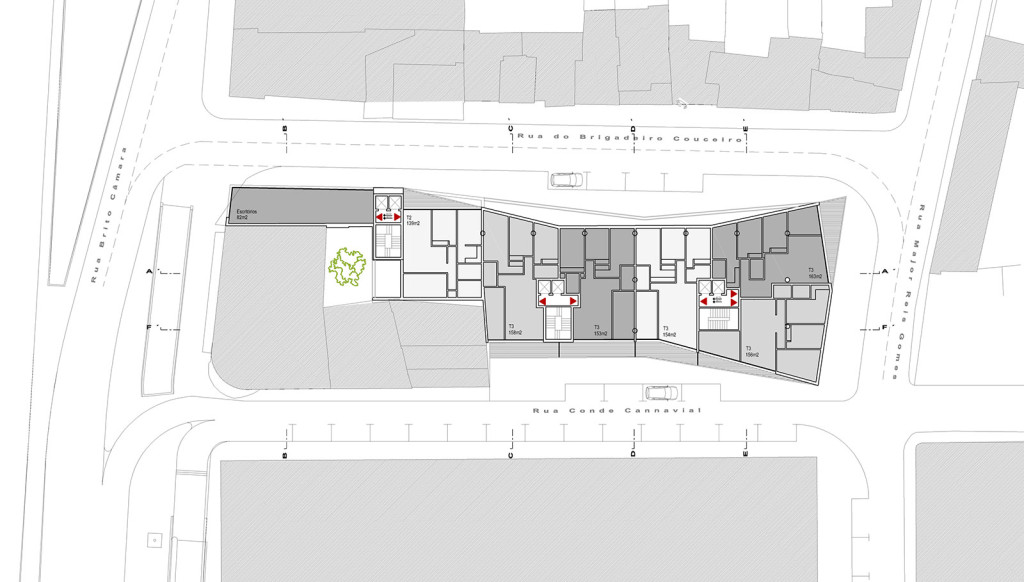
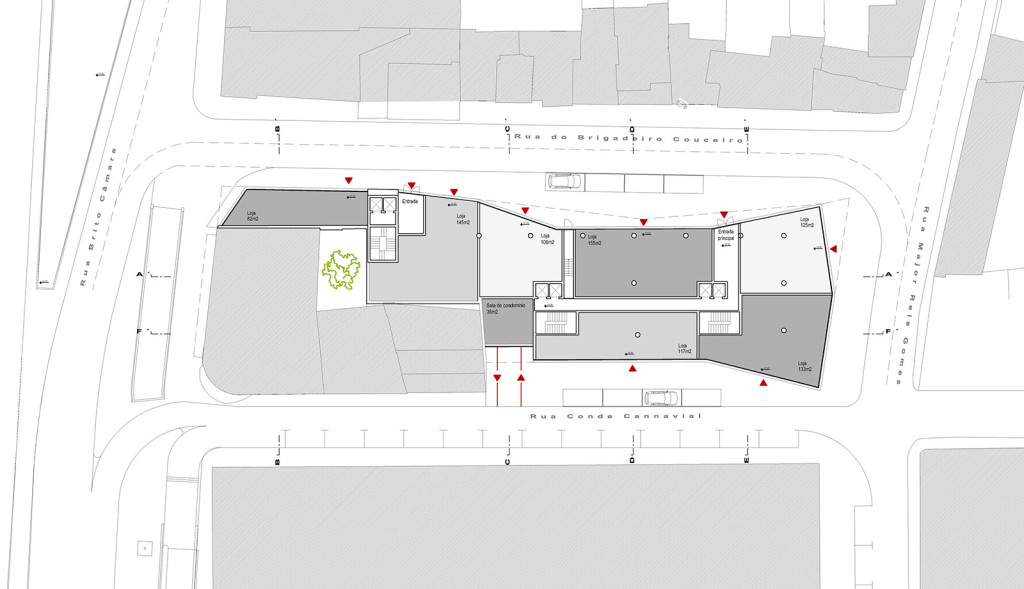
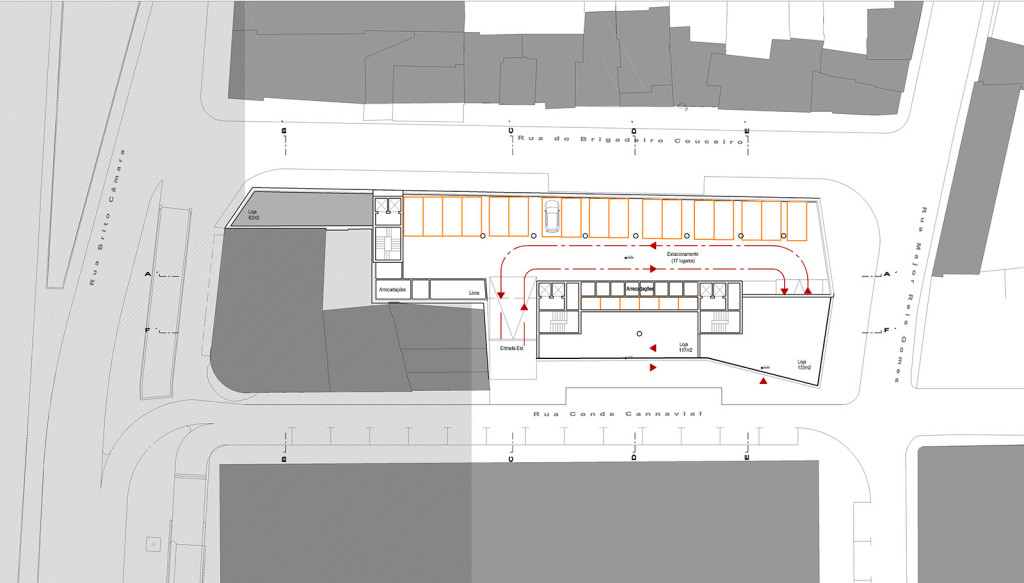
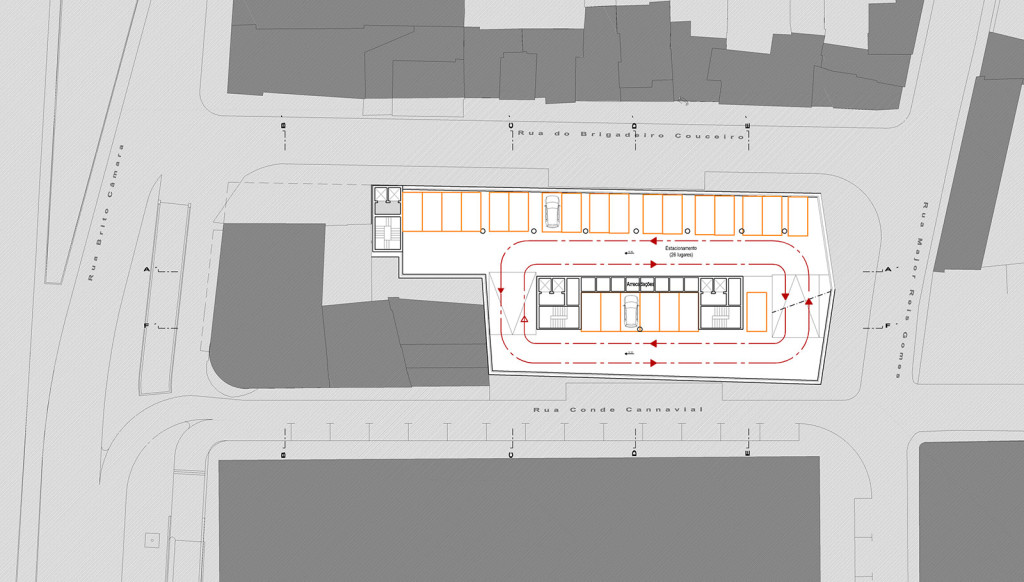
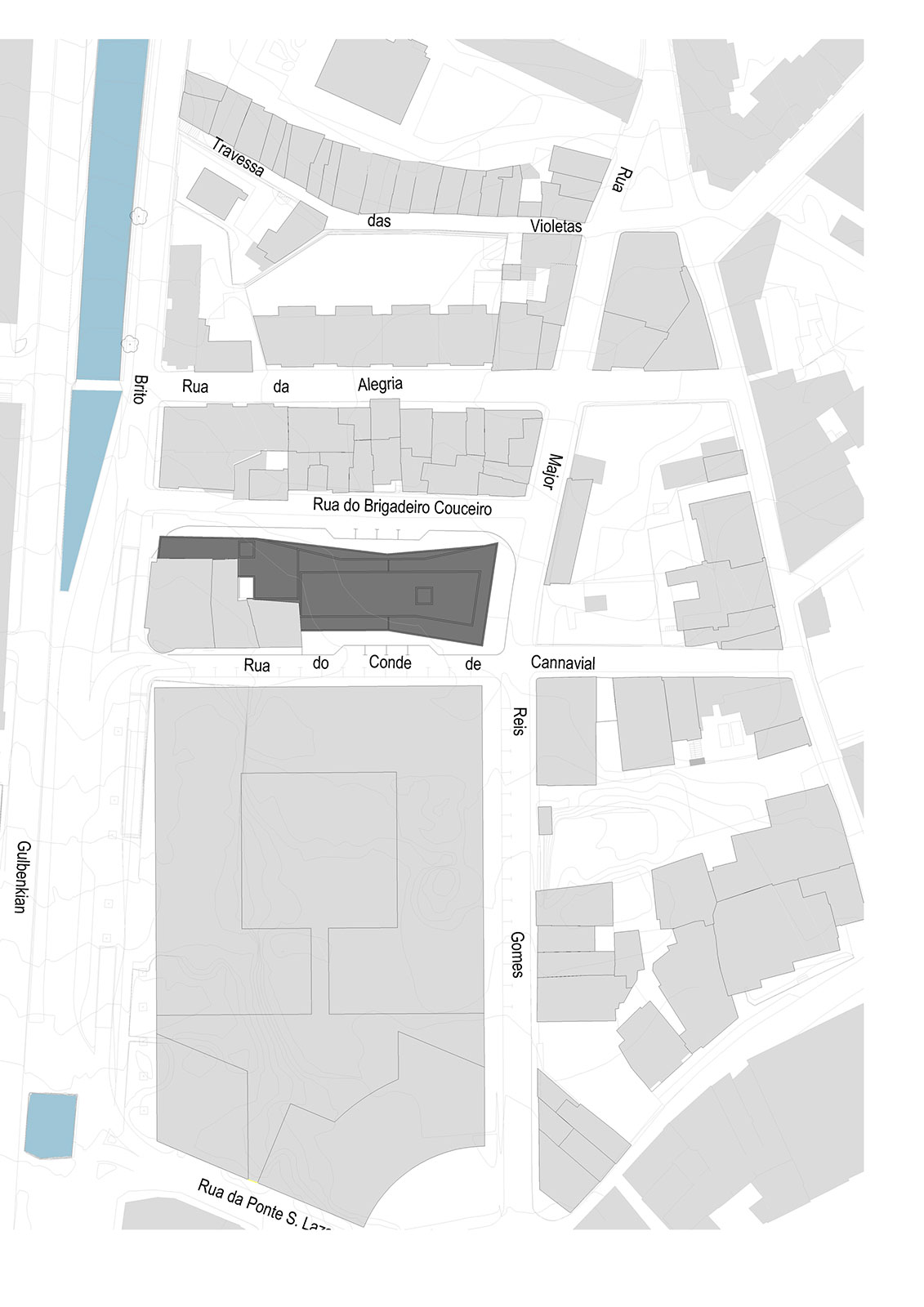
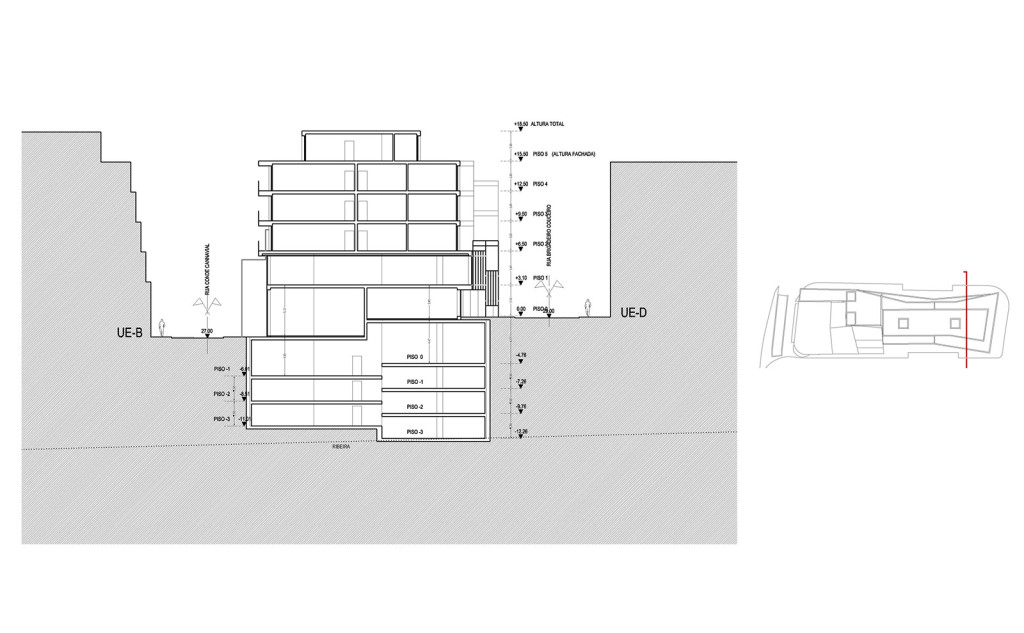
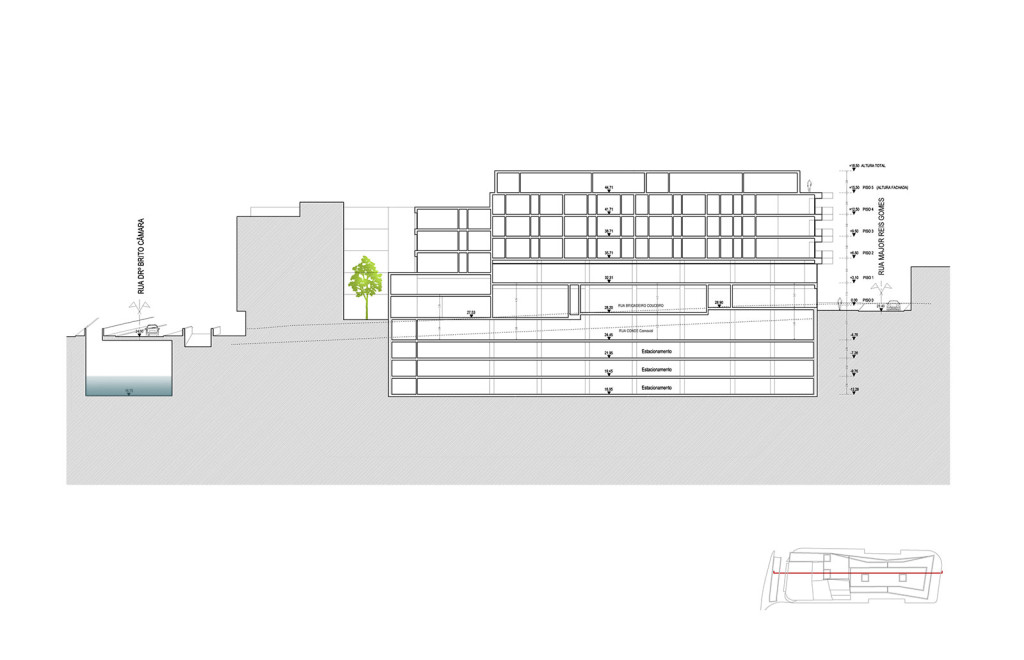
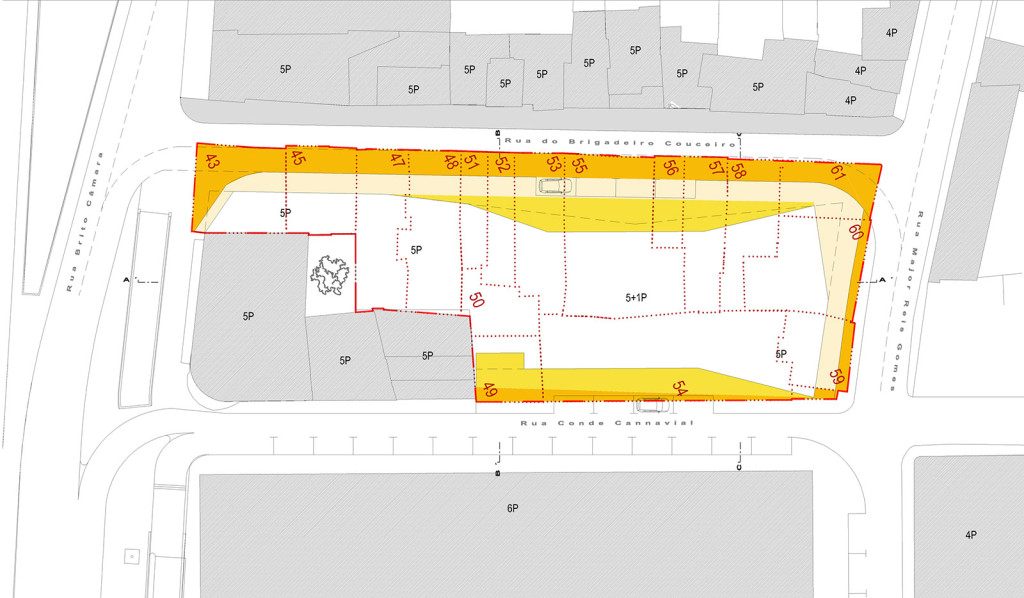
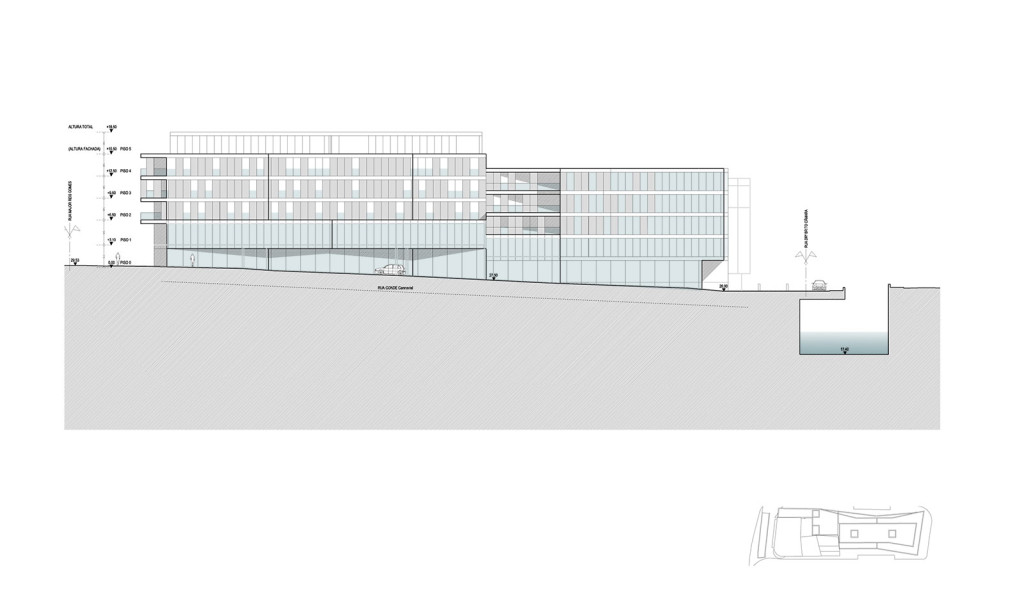
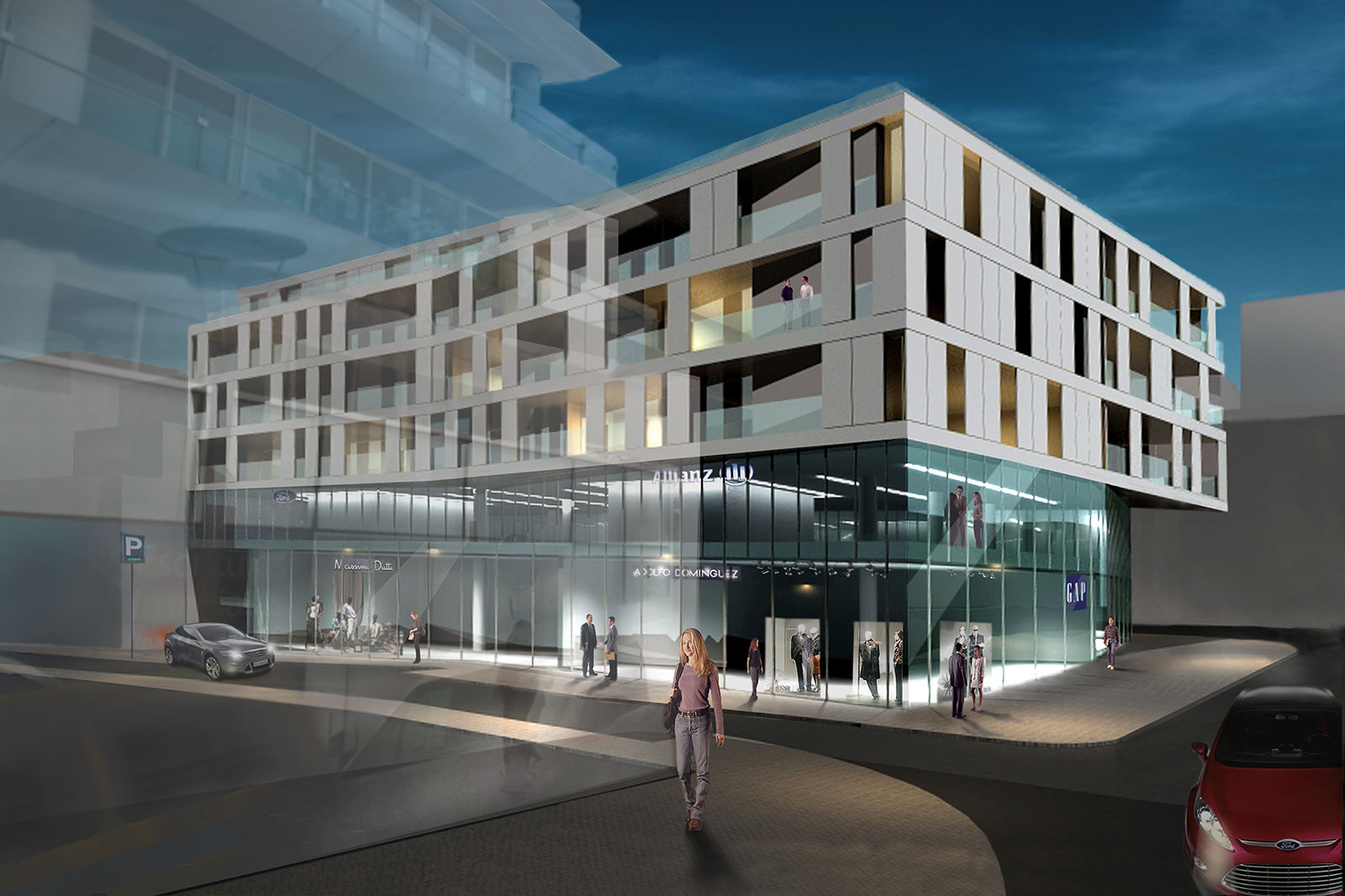
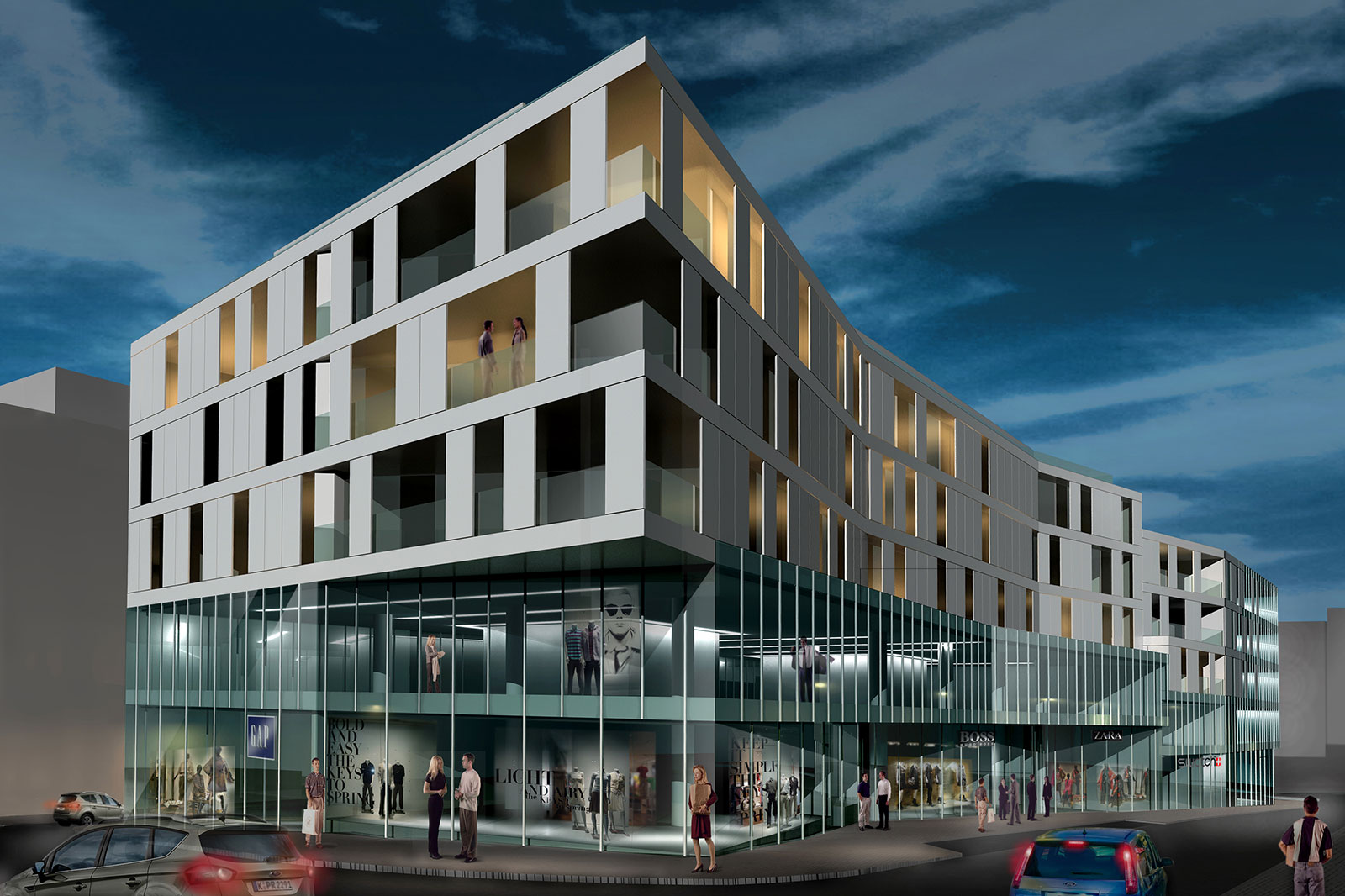
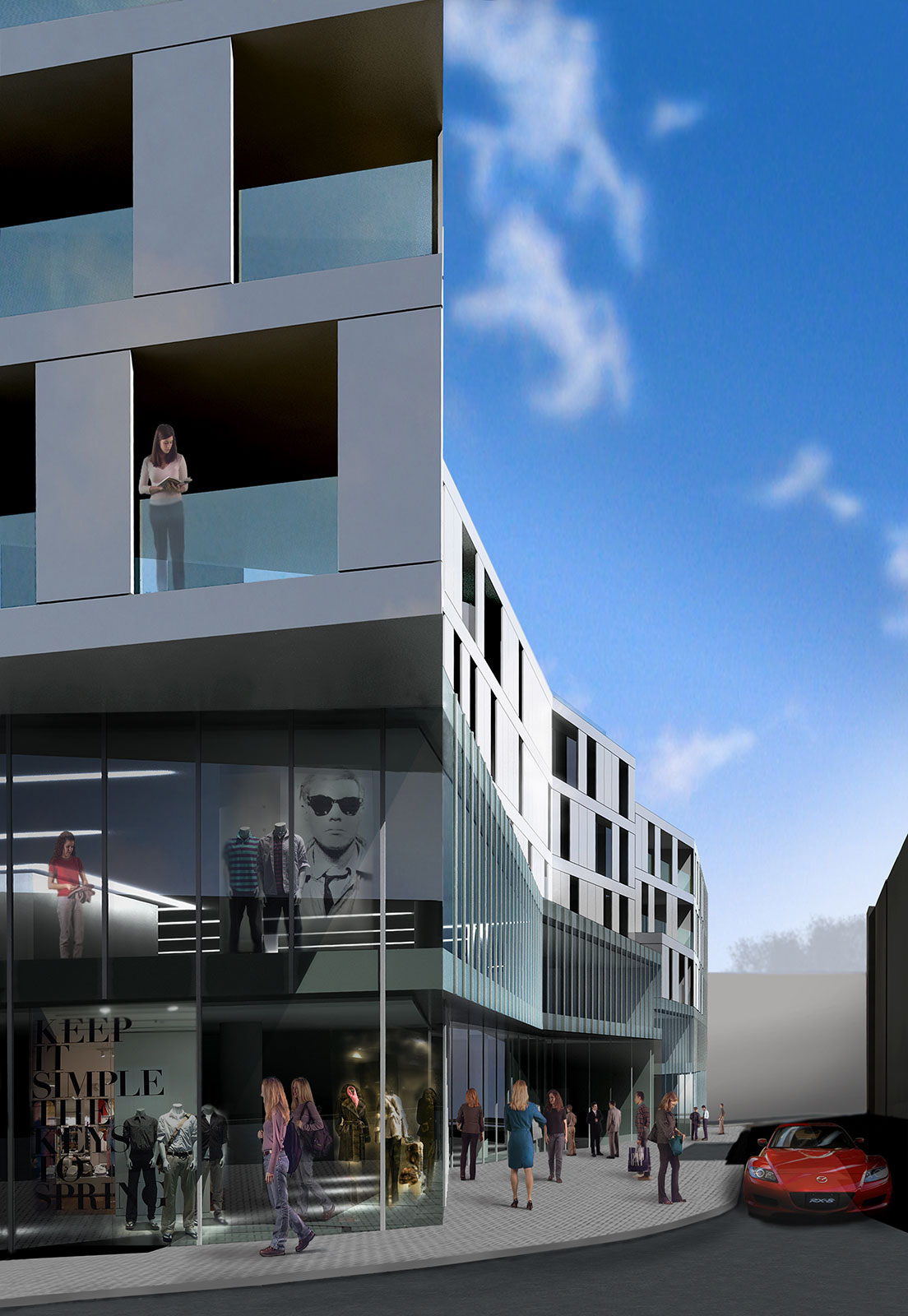
The renewal of a small block in the city centre is the main goal of this multi-purpose building. It will provide space for new businesses such as shops, offices and residential. This program will help boost the city centre life. It is a six-storey 10 500m2 building, with three basements. Shops will fill the first two floors, offices the next floor and apartments the top floors.
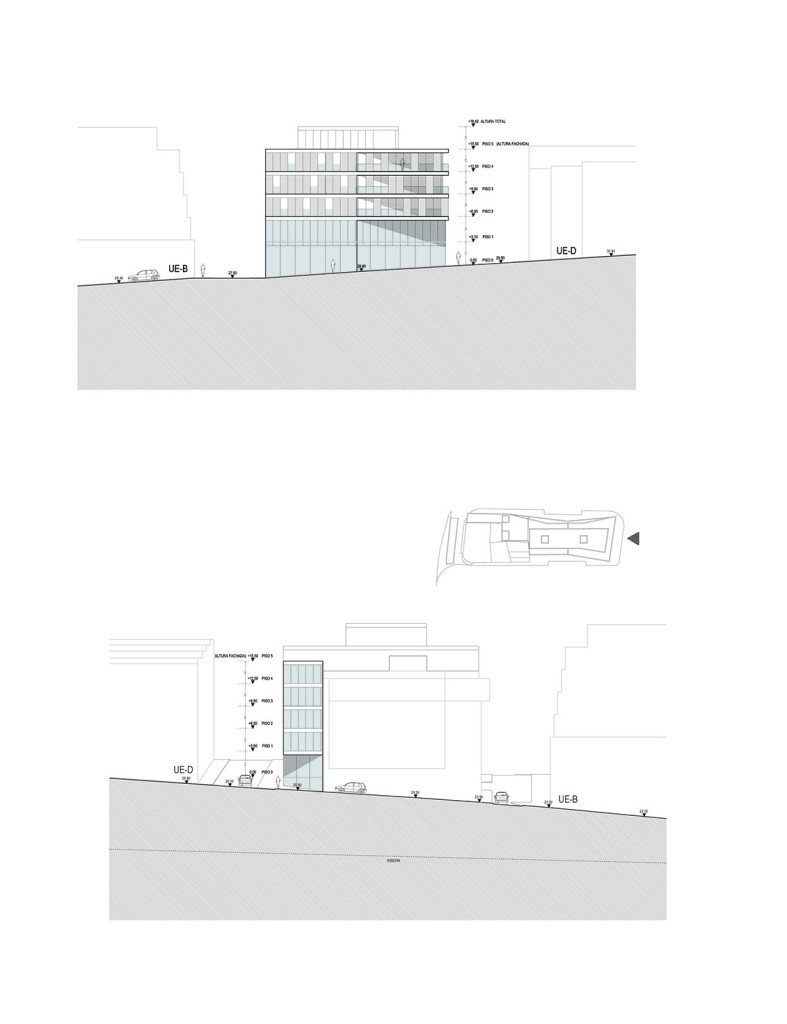
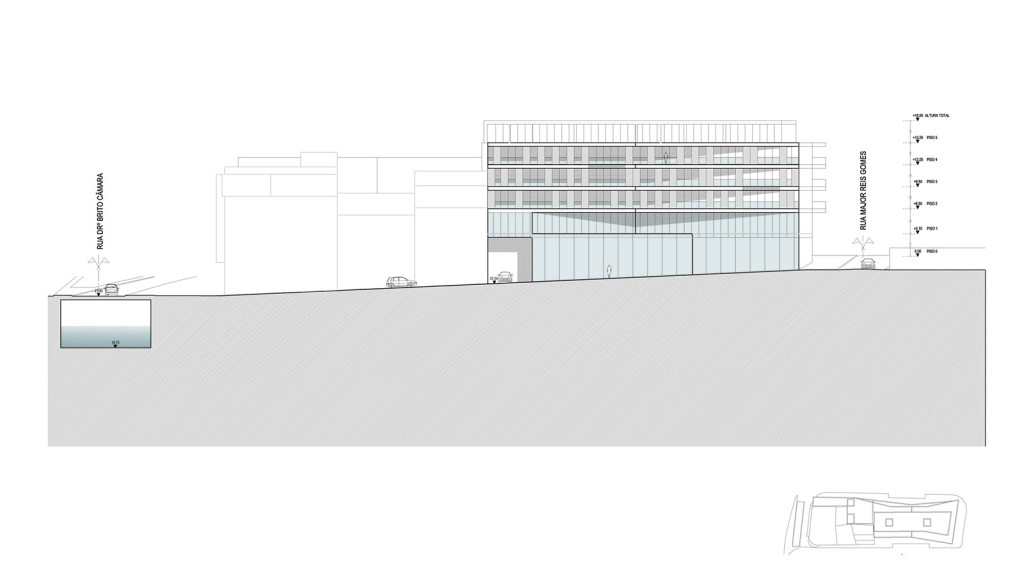
The façade is made of metal and glass panels with the balconies situated behind the facade’s perimeter. The shape of the building is not straight linear, and show smooth breaks as a result of the urban and building regulations.
The shops and office floors have transparent facades which become more opaque as they reach the apartment top floors. The facade is made of modules which alternate to form a pattern of walls, windows or balconies, scattered horizontally.
Due to the site’s topography and the length of the building it was necessary to divide its volume in various sections so as to make it possible to adjust the different levels of the four surrounding streets. There are three main entrances: two on Rua Brigadeiro Oudinot, to access the offices and the apartments and one on Rua Conde Canavial leading to the car parking. The shops at the ground level have direct access to the streets.
status – not built
location – Funchal Madeira Portugal
year – 2012
architects – Duarte Caldeira, Filipe Clairouin

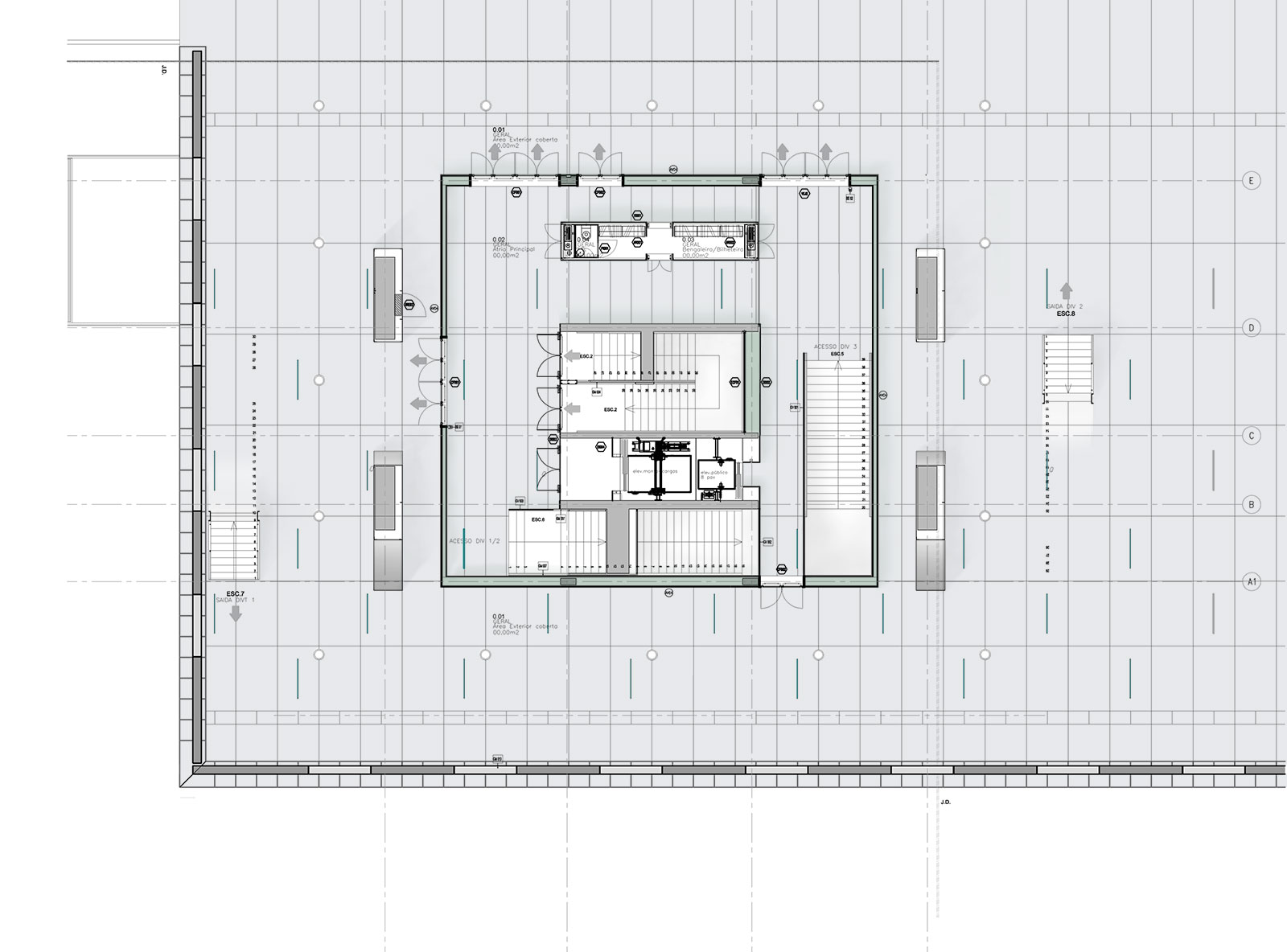
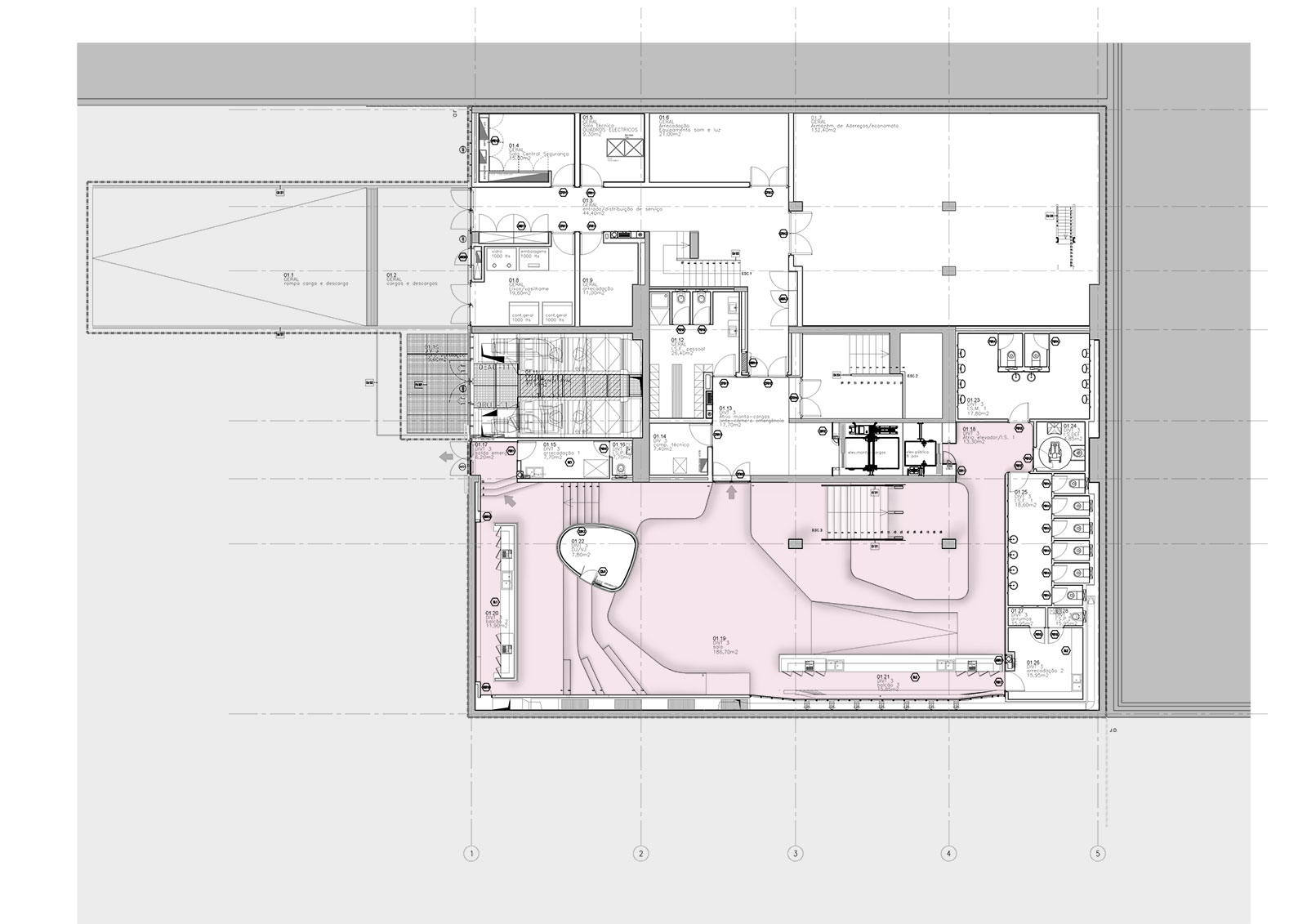
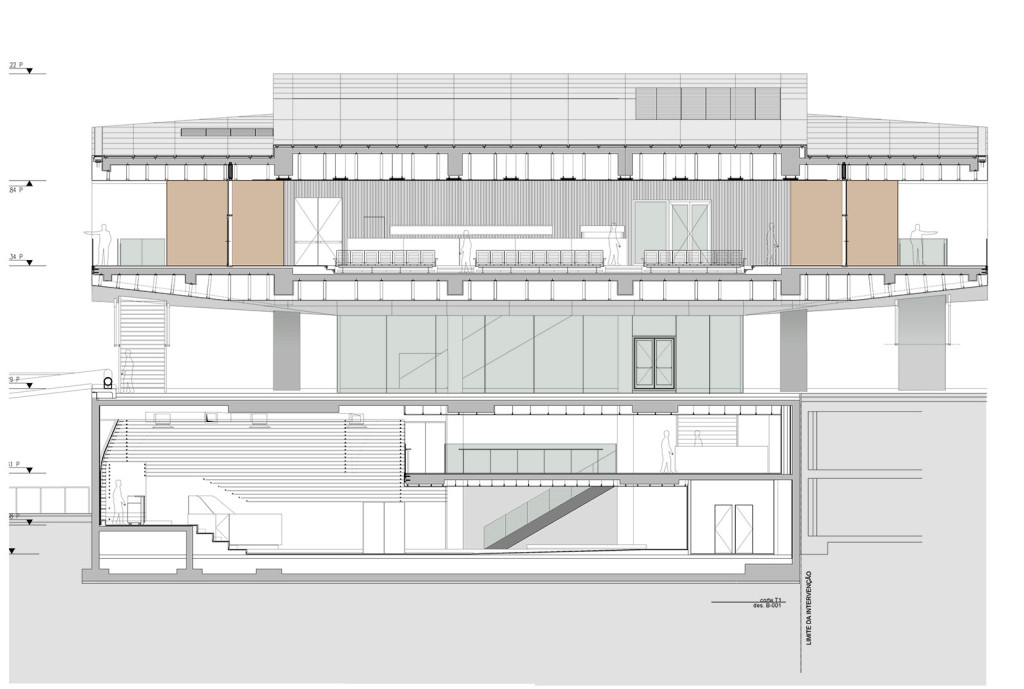
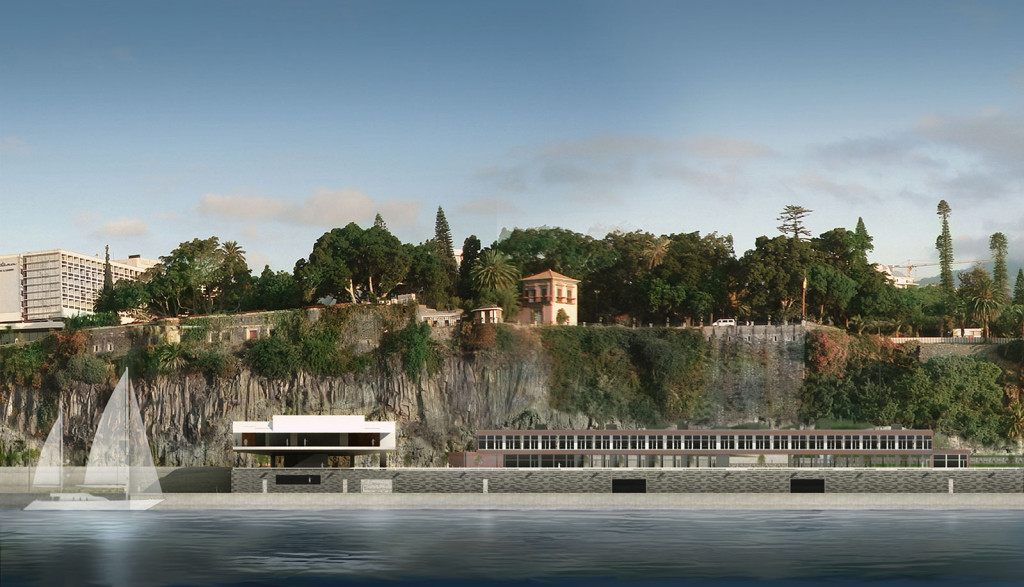
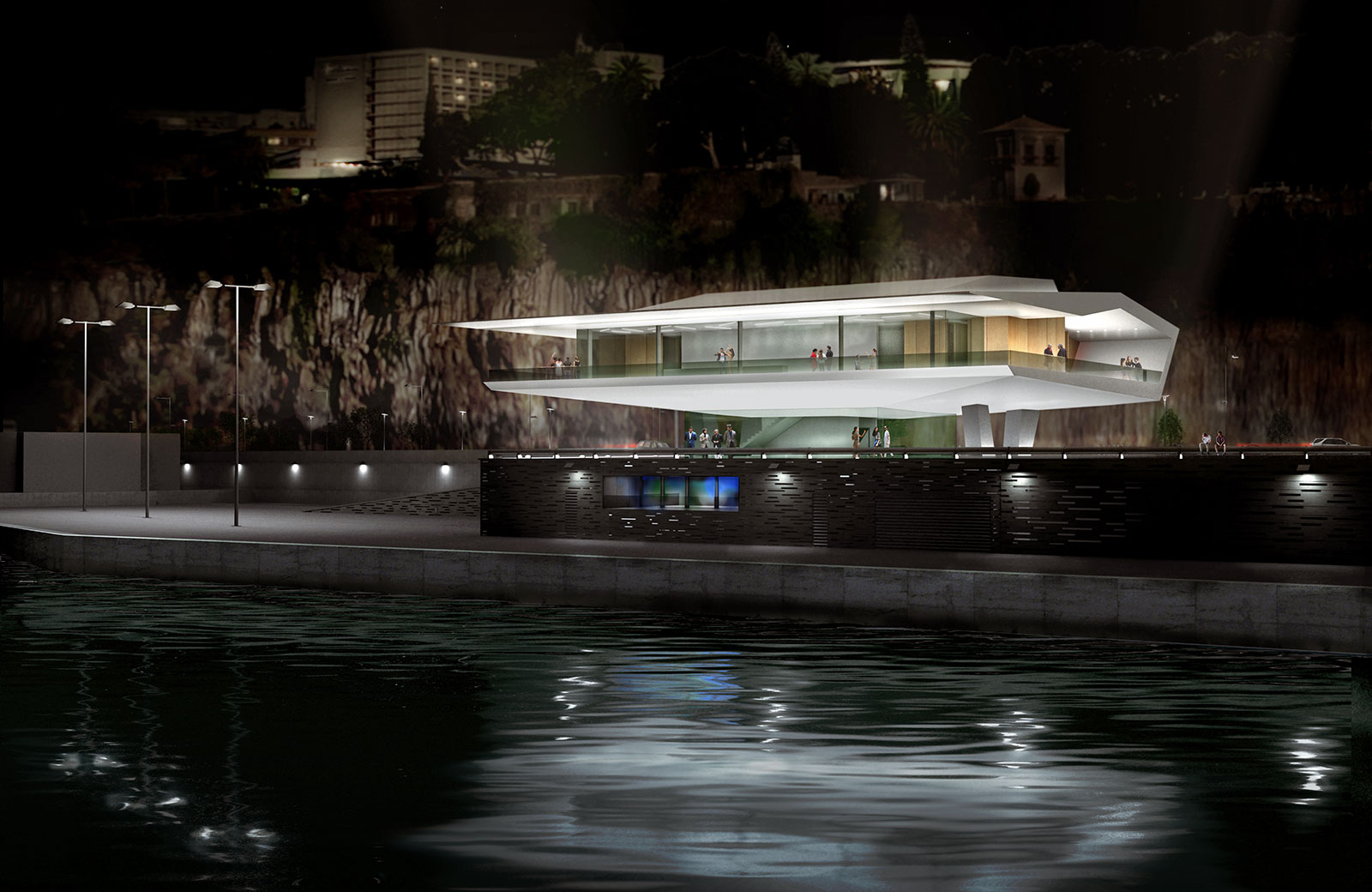
A new square with a southern seafront surrounded by three buildings was built overlooking the harbour of Funchal. On its western end there would be a building accommodating two nightclubs and a bar.
The building is partially situated above the square level, where you find the main entrance, and on the level below. Its upper part is clearly visible and the lower totally hidden.
Looking at the profile of the building you will see that it is shaped as a lying “U” resembling a movement that begins at the seafront, goes over the square and back again towards the sea, fading into a thin cantilever. This section is elevated and stands on pillars that, together with the ground floor glass facade, offers easy visibility of its lower premises. The floor on the square level gives access to various areas such as the sea view panoramic bar upstairs and the discotheque on the opposite side. In the discotheque the glass sidewalls lead to the harbour and city view balconies. Below the main entrance floor there is another discotheque with a balcony overlooking the harbour.
Metal, wood and glass cover the walls of this building, which stands as a piece on its own, partially displaying the qualities of the nautical construction.
status – not built
location – Funchal Madeira Portugal
year – 2008
architects – Duarte Caldeira, Sergio Gouveia, Filipe Clairouin, Roberto Castro






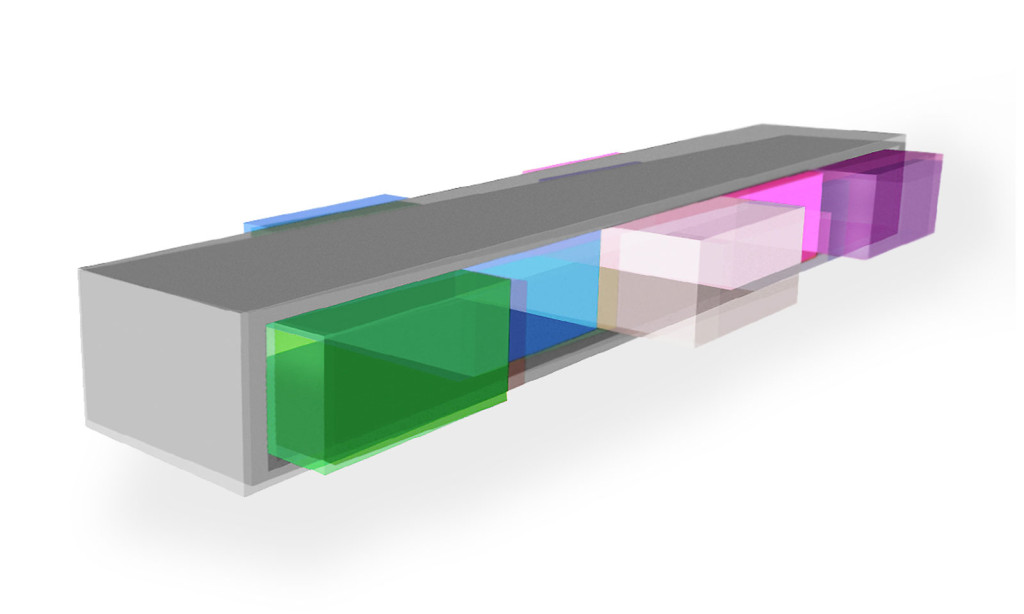
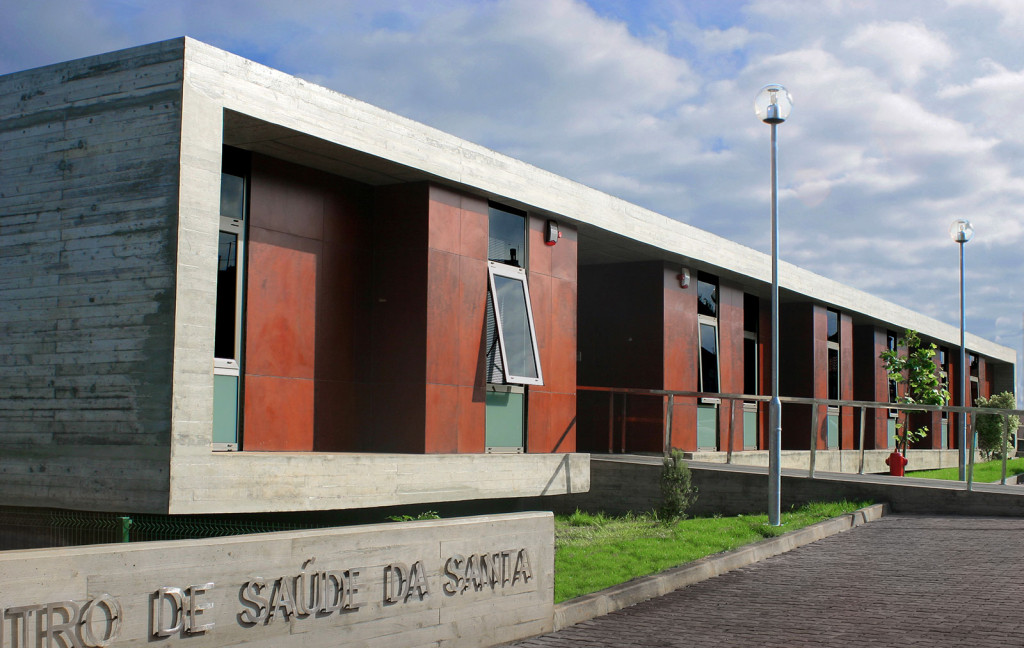
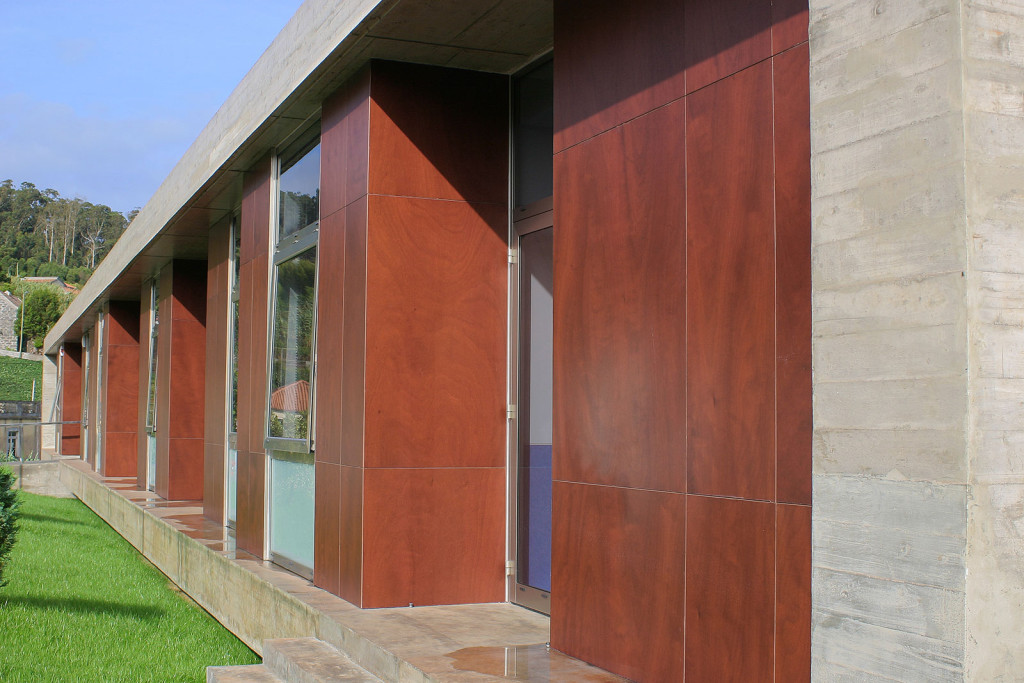
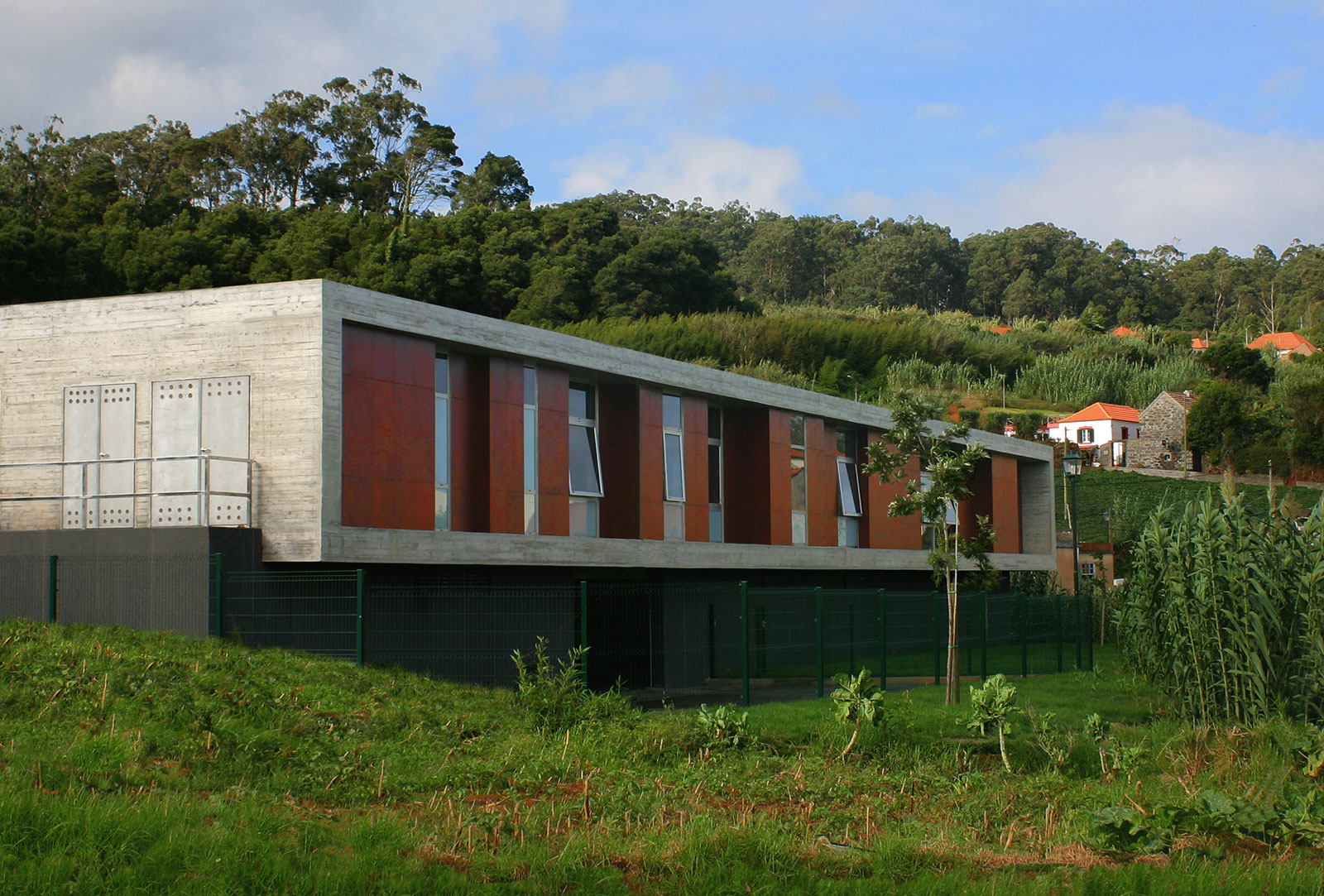
The Health Centre is designed as a set of small volumes of different widths, placed next to each other and huddled together, making a set of small boxes. These boxes correspond to the interior compartments and are surrounded by a fair face concrete band that holds them together. The boxes are made of phenolic mahogany wood with aluminium and glass windows.
This set of boxes stretched parallelepiped volume slightly raised from the ground, appears to be an object rather than a building.
Its small size and height similar to the other buildings, blends it in the surrounding rural area.
status – built
location – Pto Moniz Madeira Portugal
year – 2004
architects – Duarte Caldeira, Filipe Clairouin
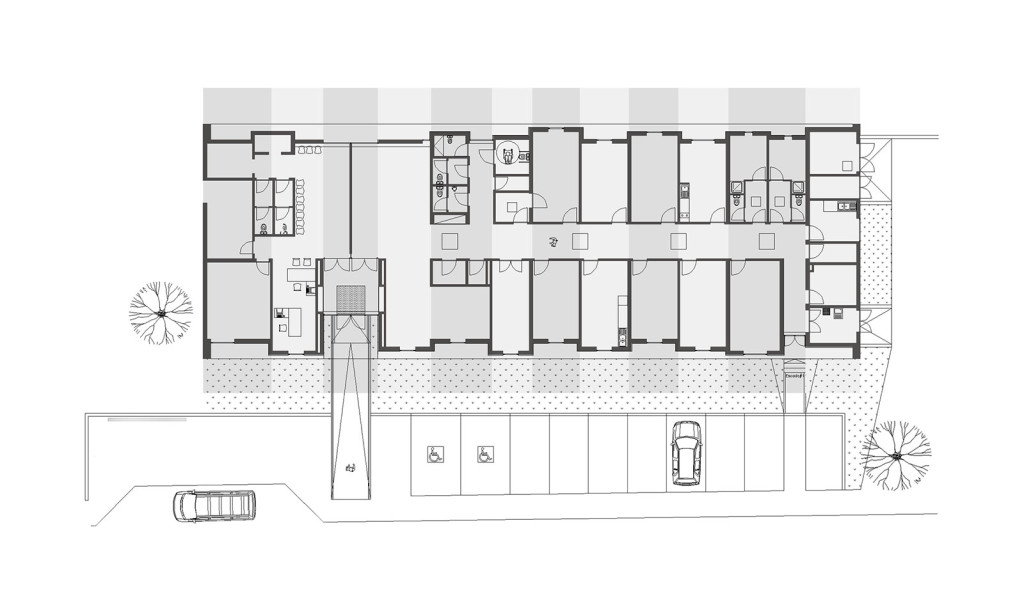

The site is near the town centre of Caniço, an area with natural landscape and residential buildings. The civic centre provides health care, social services and a nursing home.
It is a simple volume, with a clear and well-defined design. In order to adapt to the steep and rugged terrain and the various features that it accommodates, the volume was adjusted and modified accordingly. This resulted in two courtyards located at the back and a more suitable interior layout with better connection with the exterior for good natural lighting and ventilation.
The building has a total of six floors. The parking is in the two lower floors open to the outside.
Due to their various activities the three departments require treir own private entrances and access. As they are located on different floors, these were placed on different sides of the building to better adjust to the steep terrain.
The health centre occupies two floors filled with physician’s surgeries, treatment rooms, a gym, physiotherapy rooms, etc. The social services area comprises of several offices and meeting rooms and an adult day-care centre with various rooms for activities, dining room and kitchen. The nursing home has 12 single rooms and 6 double rooms, a lounge, staff rooms, a laundry room and an assisted bathroom.
The building is surrounded by a garden that goes right up to the site boundaries.
status – built
location – Sta Cruz Madeira Portugal
year – 2005
architects – Duarte Caldeira, Rui Vieira, Filipe Araújo


